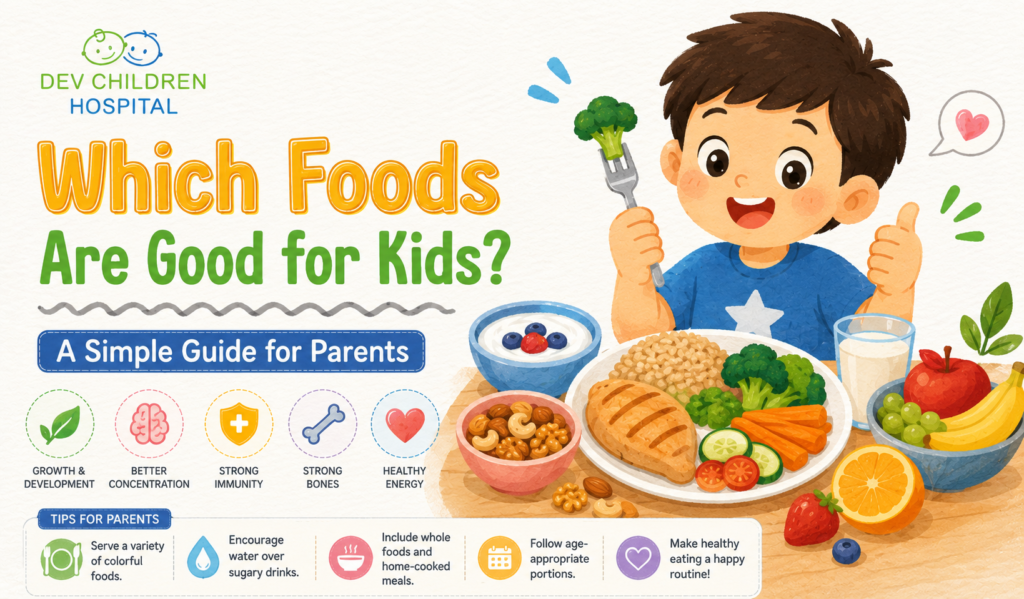
Every parent wants their child to grow well, stay active and develop a strong immune system. Food plays an important role in supporting these goals. However, with so many packaged foods, health drinks and online recommendations available, parents may find it difficult to understand which foods are actually good for children.
Healthy food for kids does not have to be expensive, complicated or completely different from regular family meals. Simple homemade foods such as dal, rice, roti, vegetables, fruits, eggs, milk and curd can provide many of the nutrients children need.
The goal should not be to depend on one “superfood.” Instead, parents should provide children with a balanced variety of foods from different food groups.
Why Is Healthy Food Important for Children?
Childhood is an important period of physical and mental development. Children need enough energy and nutrients to support their growth, learning, daily activities and immune system.
A balanced diet can help:
- Support normal height and weight gain
- Build strong bones and muscles
- Improve energy levels
- Support brain development
- Maintain healthy digestion
- Strengthen the immune system
- Improve concentration and learning
- Reduce the risk of nutrient deficiencies
- Help children maintain a healthy body weight
Food is only one part of healthy development. Sleep, physical activity, genetics, hormones and any underlying medical conditions can also affect a child’s growth.
What Are the Best Foods for Kids?
The best foods for kids are usually fresh, minimally processed and rich in essential nutrients. Parents should try to include foods from the following groups throughout the day.
1. Fruits
Fruits provide vitamins, minerals, antioxidants and fibre. They can also satisfy a child’s desire for something sweet without relying on chocolates, biscuits or sugary drinks.
Healthy fruit options include:
- Banana
- Apple
- Orange
- Papaya
- Guava
- Mango
- Watermelon
- Pomegranate
- Berries
- Seasonal local fruits
Whole fruit is generally a better everyday option than packaged fruit juice because it contains more fibre and is usually more filling.
Parents can serve fruit:
- With breakfast
- In a school lunch box
- As an evening snack
- With plain curd
- As a homemade fruit bowl
Use age-appropriate pieces to reduce choking risk, especially for younger children.
2. Vegetables
Vegetables provide fibre and several important vitamins and minerals. Different-coloured vegetables contain different nutrients, so parents should offer variety instead of serving the same vegetable every day.
Good vegetables for children include:
- Carrots
- Spinach and other leafy vegetables
- Peas
- Beans
- Beetroot
- Pumpkin
- Sweet potato
- Cauliflower
- Broccoli
- Tomatoes
- Cucumber
Children who refuse vegetables may accept them when they are added to familiar dishes such as:
- Vegetable poha
- Stuffed paratha
- Vegetable upma
- Mixed vegetable khichdi
- Paneer rolls
- Homemade sandwiches
- Dosa or cheela batter
Avoid hiding vegetables in every meal. Children should also gradually learn to recognise, taste and accept vegetables in their normal form.
3. Protein-Rich Foods
Protein supports muscle development, tissue repair and normal growth. Both vegetarian and non-vegetarian foods can provide protein.
Protein-rich foods for kids include:
- Dal
- Moong
- Chana
- Rajma
- Peas
- Soybean
- Tofu
- Paneer
- Curd
- Eggs
- Chicken
- Fish
- Nuts and seeds
Parents can combine different foods to improve the overall nutritional value of a meal. Examples include dal with rice, curd with paratha, paneer with roti or egg with whole-wheat toast.
Whole nuts can be a choking risk for young children. Use powdered nuts, smooth nut butter or another age-appropriate form when required. Also check for possible food allergies before introducing new foods.
4. Milk and Calcium-Rich Foods
Calcium is important for developing bones and teeth. Milk can be a useful source of calcium, protein and other nutrients, but it is not the only option.
Calcium-rich foods include:
- Milk
- Plain curd
- Paneer
- Ragi
- Sesame seeds
- Tofu
- Some leafy vegetables
- Fortified dairy alternatives
Avoid depending heavily on flavoured milk, sugary milk powders or sweetened yogurt. These products may contain significant amounts of added sugar.
Children with lactose intolerance, milk allergy or digestive discomfort after consuming dairy products should be assessed by a doctor rather than removing several food groups without professional guidance.
5. Whole Grains and Healthy Carbohydrates
Children need carbohydrates for energy. The quality of the carbohydrate is important.
Healthy options include:
- Whole-wheat roti
- Rice
- Oats
- Dalia
- Poha
- Upma
- Idli
- Ragi
- Jowar
- Bajra
- Sweet potato
- Whole-grain bread
Parents do not need to eliminate rice or roti from a child’s diet. Instead, combine them with vegetables, dal, curd, eggs, paneer or another protein source to create a more balanced meal.
Very high-fibre diets may not be suitable for every baby or toddler. The quantity and texture should be appropriate for the child’s age.
6. Healthy Fats
Healthy fats provide energy and support brain development. Children, particularly younger children, need suitable amounts of fat in their diet.
Sources of healthier fats include:
- Almonds
- Walnuts
- Groundnuts
- Flaxseeds
- Chia seeds
- Sesame seeds
- Nut butters without excessive added sugar
- Fish
- Moderate amounts of cooking oil
Nuts and seeds should be provided in a safe, age-appropriate form.
Which Nutrients Are Important for a Child’s Growth?
Children require several nutrients rather than one special vitamin or food.
Protein
Protein supports muscles, tissues and normal physical growth. Dal, beans, eggs, paneer, curd, fish and chicken are useful protein sources.
Calcium and Vitamin D
Calcium and vitamin D support bone development. In addition to suitable food sources, safe sunlight exposure and medical guidance may be needed, depending on the child’s health and risk of deficiency.
Iron
Iron supports healthy blood formation and energy levels.
Iron-rich foods include:
- Leafy vegetables
- Lentils
- Beans
- Eggs
- Meat
- Sesame seeds
- Iron-fortified foods
Combining plant-based iron sources with vitamin C-rich foods such as guava, tomatoes or oranges may support iron absorption.
Fibre
Fibre supports bowel movements and gut health. Fruits, vegetables, beans, oats and whole grains are useful sources.
A sudden increase in fibre without enough water may cause bloating or discomfort. Increase it gradually when necessary.
Zinc
Zinc plays a role in growth, immunity and healing. It is available in foods such as beans, dairy products, eggs, meat, nuts and seeds.
Healthy Indian Breakfast Ideas for Kids
Breakfast can provide energy for school, play and concentration. It does not need to be complicated.
Healthy breakfast options include:
- Vegetable poha
- Vegetable upma
- Idli with sambar
- Moong dal cheela
- Paneer paratha with curd
- Egg with whole-wheat toast
- Oats porridge with fruit
- Dalia with vegetables
- Ragi dosa
- Besan cheela
- Homemade vegetable sandwich
- Fruit with plain curd
Try to include a protein source whenever possible. For example, add curd to paratha, paneer to a sandwich or an egg with toast.
Healthy Lunch and Dinner Ideas
A healthy meal can be prepared using familiar household foods.
Some balanced meal combinations are:
- Roti, dal, vegetable and curd
- Rice, rajma and salad
- Vegetable khichdi with curd
- Paneer with roti and vegetables
- Egg curry with rice
- Chicken or fish with roti and vegetables
- Vegetable pulao with curd
- Dal cheela with paneer filling
- Chole with rice and salad
- Sambar with rice or idli
Parents do not have to make every meal perfect. Try to create balance across the entire day or week.
Healthy Snacks for Kids
Packaged snacks are convenient, but they are often high in salt, sugar or unhealthy fats. Keep simple homemade or minimally processed snack options available.
Healthy snacks for kids include:
- Fresh fruit
- Roasted chana
- Makhana
- Boiled corn
- Sprouts chaat
- Plain curd with fruit
- Paneer cubes
- Homemade vegetable sandwich
- Boiled egg
- Dhokla
- Idli
- Nut butter on whole-wheat toast
- Homemade laddoo with controlled sugar
Snack portions should not be so large that the child loses their appetite for the next main meal.
Foods That Support Healthy Digestion in Children
Digestive health can affect a child’s appetite, comfort and eating habits.
Foods that may support healthy digestion include:
- Fruits
- Vegetables
- Oats
- Whole grains
- Dal and beans
- Curd containing suitable live cultures
- Fermented foods such as idli and dosa
- Adequate water
Fibre should be introduced gradually. Children who have frequent constipation, diarrhoea, stomach pain, vomiting or bloating should receive medical evaluation rather than depending only on home remedies.
What Foods Should Parents Limit?
Children can occasionally enjoy their favourite treats, but they should not replace nutritious everyday meals.
Parents should limit:
- Packaged chips
- Sugary drinks
- Soft drinks
- Excess chocolates and candies
- Cream biscuits
- Cakes and pastries
- Deep-fried fast food
- Instant noodles
- Highly processed meats
- High-sugar breakfast cereals
- Packaged fruit drinks
- Excessively salty snacks
Completely banning every treat may make children more attracted to those foods. A practical approach is to keep nutritious foods available regularly and reserve highly processed foods for occasional consumption.
Tips for Parents of Picky Eaters
Picky eating is common during childhood. Pressuring or forcing a child to eat may make mealtimes more stressful.
Parents can try the following strategies:
- Serve small portions
- Introduce one new food at a time
- Offer new foods alongside familiar foods
- Allow the child to explore the food
- Present meals in colourful and attractive ways
- Involve children in shopping or simple meal preparation
- Maintain regular meal and snack timings
- Avoid allowing constant snacking throughout the day
- Eat together as a family when possible
- Set a healthy example
- Avoid using sweets as a reward
- Continue offering rejected foods without pressure
A child may need to see or taste a new food several times before accepting it.
However, extreme food restriction, difficulty swallowing, frequent gagging, weight loss or poor growth should not be treated as ordinary picky eating. These signs require medical attention.
How Can Parents Create a Balanced Plate?
A simple balanced meal may contain:
- A fruit or vegetable
- A grain or carbohydrate such as roti or rice
- A protein such as dal, egg, paneer, beans, chicken or fish
- A suitable calcium source such as curd
- Water as the main drink
The exact amount depends on the child’s age, size, appetite, activity level and medical needs.
Allow children to recognise their hunger and fullness signals. Parents can decide which healthy foods are served, while children can be allowed some control over how much they eat.
Does Every Child Need the Same Diet?
No. Nutritional requirements can differ based on:
- Age
- Growth stage
- Physical activity
- Height and weight
- Medical conditions
- Food allergies
- Digestive problems
- Vegetarian or non-vegetarian preferences
- Underweight or overweight concerns
- Hormonal or metabolic conditions
Avoid comparing one child’s appetite or body size with another child’s. Growth should be assessed using appropriate growth charts and medical evaluation.
Parents should also avoid starting protein powders, vitamin supplements, appetite stimulants or height-increasing products without consulting a qualified doctor.
Important Food Safety Tips
Parents should keep the following precautions in mind:
- Provide food in an age-appropriate texture and size
- Supervise young children while they eat
- Avoid whole nuts and other choking hazards in young children
- Wash fruits and vegetables properly
- Cook eggs, meat and fish thoroughly
- Store cooked food safely
- Check packaged food labels for sugar, salt and allergens
- Introduce allergenic foods carefully and seek medical advice when required
- Do not give honey to babies below 12 months
- Do not follow restrictive diets without professional guidance
When Should Parents Consult a Doctor?
Speak to a paediatrician or child health specialist when a child has:
- Poor weight gain
- Slow height gain
- Sudden weight loss
- Very poor appetite
- Extreme food restriction
- Constant tiredness or weakness
- Recurrent stomach pain
- Frequent constipation or diarrhoea
- Repeated vomiting
- Difficulty chewing or swallowing
- Suspected food allergy
- Persistent bloating
- Blood in the stool
- Signs of vitamin or mineral deficiency
Growth or digestive problems may not always be caused by food habits. Hormonal, gastrointestinal, metabolic and other medical conditions may need to be ruled out.
The best healthy food for kids is not one specific fruit, vegetable or health drink. Children need a varied diet containing fruits, vegetables, grains, protein-rich foods, suitable dairy or alternatives and healthy fats.
Parents should focus on regular homemade meals, age-appropriate portions and positive eating habits. Packaged snacks and sugary drinks should be limited, but mealtimes should not become a source of fear or conflict.
When a child has poor growth, persistent digestive symptoms, an extremely limited diet or suspected nutritional deficiency, professional evaluation is important.
Sanidhya Clinic provides specialised care for children with growth, hormonal and digestive health concerns. Parents who are worried about their child’s growth, appetite or digestion can schedule a consultation for an appropriate medical assessment.
Supporting Healthy Growth at Dev Children Hospital
Good nutrition is an important part of childhood, but a child’s health cannot be judged by food choices alone. Appetite, height, weight, development, sleep, activity levels, vaccination status and existing health conditions must also be considered.
At Dev Children Hospital, pediatric care focuses on the child’s complete health. The pediatric team helps parents understand whether their child is growing appropriately and whether concerns such as poor appetite, restricted eating, weakness or repeated illness require medical attention.
During a child health consultation, the pediatric team may review:
- Height and weight progression
- Age-appropriate growth milestones
- Daily eating patterns
- Appetite and feeding behaviour
- Food allergies and intolerances
- Frequent stomach or bowel problems
- Signs of nutritional deficiencies
- Vaccination and preventive healthcare needs
- Sleep, activity and general development
- Existing medical conditions affecting nutrition
A healthy diet should be personalised according to the child’s age and development. Foods that are appropriate for an older child may not be safe or suitable for a baby or toddler. Parents should also avoid giving supplements, appetite stimulants, protein powders or so-called height-gain products without professional guidance.
Our Approach to Children’s Health
Dev Children Hospital exists to put children’s health first. Its team combines pediatric expertise with a caring and child-friendly approach so that families receive clear guidance and children feel safe during
Frequently Asked Questions
What are the healthiest foods for kids?
Fruits, vegetables, dal, beans, whole grains, eggs, dairy products, nuts, seeds, fish and lean meat are nutritious options. The right choices depend on the child’s age and individual needs.
Which foods support a child’s growth?
Protein-rich foods, calcium sources, iron-rich foods, fruits, vegetables and whole grains support normal growth. Height is also influenced by genetics, hormones, sleep, physical activity and overall health.
What should a child eat every day?
A child’s daily diet should ideally include fruits or vegetables, a protein source, grains or other energy foods, suitable calcium-rich foods and enough water.
Which foods can support immunity in children?
A varied diet containing fruits, vegetables, protein, whole grains, nuts and seeds provides nutrients needed for normal immune function. No single food can prevent every infection.
What are healthy snacks for children?
Fruit, roasted chana, makhana, curd, paneer, boiled eggs, sprouts, dhokla and homemade sandwiches are practical snack options.
What should I feed a picky eater?
Offer small portions, combine new foods with familiar foods, follow regular mealtimes and avoid forcing the child to eat. Seek medical advice if picky eating affects growth or causes severe food restriction.
Are health drinks necessary for children?
Most children who eat a varied diet do not automatically need a commercial health drink. Some products contain high levels of added sugar. Ask a doctor before using supplements or nutrition powders regularly.