Watching your little one reach for your plate or mimic your chewing is a thrilling milestone. It signals that they are growing, developing, and getting ready for a whole new world of flavors. However, transitioning from an exclusive milk diet can also feel overwhelming for parents.
When is the right time? What should you feed them first? And most importantly, how do you do it safely?
At Dev Children Hospital, Vadodara, our experienced pediatricians understand these concerns. Backed by our advanced Level-3 NICU and PICU expertise, we are committed to providing you with evidence-based, compassionate, and safe guidance. If you are wondering how to introduce solid food for babies, this comprehensive, doctor-approved guide will give you the clarity and confidence you need.
| Food Category | Why It’s Good | How to Serve Safely |
|---|---|---|
| Iron-Fortified Baby Cereal (Rice, Oats, or Multigrain) | Easy to digest and specifically formulated to prevent iron deficiency. | Mix with breastmilk or formula to achieve a thin, runny consistency. Avoid added sugar. |
| Mashed Fruits (Banana, Apple, Pear, Chikoo) | Naturally sweet, rich in vitamins, and gentle on a developing digestive system. | Steam hard fruits (like apple) until very soft, then mash thoroughly. No added sugar. |
| Pureed Vegetables (Sweet Potato, Carrot, Pumpkin) | Packed with beta-carotene, fiber, and essential vitamins for growth. | Steam or boil until completely soft, then puree to a smooth, lump-free texture. |
| Lentil or Khichdi Puree (Moong Dal) | A traditional, protein-rich, and easily digestible option that provides sustained energy. | Cook moong dal and rice until mushy. Blend or mash well. No added salt or spices. |
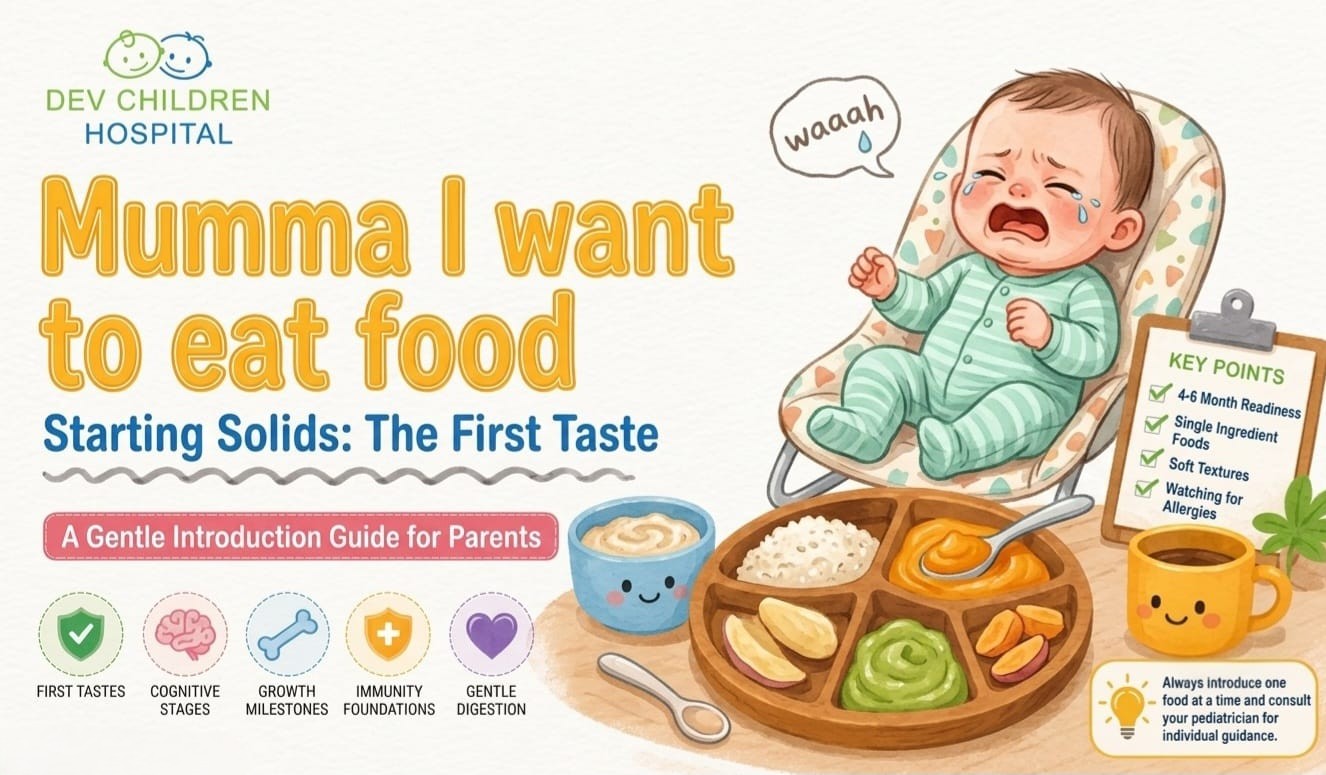
The 5-Point Checklist: Is Your Baby Ready for Solid Food?
Many parents assume that reaching the 6-month mark is the only signal to start feeding. While age is a crucial factor (the World Health Organization (WHO) recommends exclusive breastfeeding or formula for the first 6 months), true readiness is developmental.
Before offering that first spoonful, check if your baby meets these five key developmental milestones:
- Head Control: Can they hold their head up steadily and upright without support?
- Sitting Ability: Can they sit upright in a high chair or feeding seat with minimal support?
- Loss of the Tongue-Thrust Reflex: Do they no longer automatically push food out of their mouth with their tongue? (This reflex protects newborns from choking but must fade before solids can be swallowed.)
- Hand-to-Mouth Coordination: Can they pick up objects and bring them to their mouth?
- Genuine Interest in Food: Do they watch you eat, reach for your food, or open their mouth when food approaches?
If your baby checks most of these boxes and is around 6 months old, they are likely ready to begin their culinary journey.
Around 6 months of age, a baby’s natural iron stores begin to deplete, making iron-rich foods an absolute priority. The goal of early feeding is not to fill their stomach, but to introduce new tastes, textures, and essential nutrients.
Here is a quick-reference guide to the best first foods:
Month-by-Month Texture Guide: Advancing Safely
As your baby grows, their chewing and swallowing skills will rapidly improve. It is vital to advance food textures to support oral motor development and prevent picky eating later in life.
- 6 Months (The Tasting Phase): Focus on smooth, runny, single-ingredient purees. Offer just 1–2 teaspoons once a day after a milk feed.
- 7–8 Months (The Textured Phase): Transition to thicker, mashed foods with soft lumps. Introduce soft, graspable finger foods (e.g., soft-cooked carrot sticks, small pieces of ripe banana) to encourage self-feeding.
- 9–12 Months (The Family Meal Phase): Offer minced or finely chopped family foods. Your baby should be transitioning to three small solid meals a day, alongside continued breastmilk or formula feeds.
Crucial Safety Rules Every Parent Must Know
At Dev Children Hospital, safety is our highest priority. When preparing food for your infant, strict adherence to these safety rules is non-negotiable:
- Avoid Choking Hazards: Never give whole grapes, whole nuts, popcorn, hard raw vegetables, or large chunks of meat. Always cut round foods (like grapes or cherry tomatoes) lengthwise into quarters.
- The “Absolute No” List:
- No Honey before 1 year (risk of infant botulism).
- No Added Salt or Sugar (an infant’s kidneys cannot process salt, and sugar promotes unhealthy preferences).
- No Cow’s Milk as a main drink before 1 year (it lacks essential nutrients and can cause intestinal bleeding).
- Introduce Allergens Safely: Modern guidelines from the American Academy of Pediatrics (AAP) no longer recommend delaying allergenic foods. Introduce common allergens (like peanut butter, egg, and dairy) one at a time, in small amounts, at home, and wait 3–5 days before introducing another new food to monitor for reactions.
Common Mistakes Parents Make When Starting Solids
Even with the best intentions, parents can fall into common traps. Avoid these to ensure a positive feeding experience:
- Replacing Milk Too Quickly: Breastmilk or formula must remain the primary source of nutrition until your baby is 12 months old. Solids are “complementary” at this stage.
- Forcing the Baby to Eat: Babies are excellent at self-regulating their hunger. If they turn their head away or clamp their mouth shut, respect their cues. Forcing food creates negative associations.
- Offering Fruit Juice: Whole, mashed fruit provides essential fiber. Juice is essentially sugar water and offers no nutritional benefit to infants.
When to Consult a Pediatrician About Your Baby’s Diet
While starting solids is a natural process, it is important to know when to seek professional medical advice. Contact our pediatric team if you notice:
- Persistent gagging, coughing, or choking during feeds.
- Complete refusal of all textures or foods by 8–9 months of age.
- Any signs of an allergic reaction (hives, facial swelling, vomiting, or wheezing).
- Concerns about your baby’s weight gain or overall growth milestones.
Trusted Pediatric Care at Dev Children Hospital, Vadodara
Navigating your child’s health and nutrition is a journey you don’t have to take alone. As a specialized pediatric hospital in Vadodara, we provide complete pediatric and neonatal care supported by modern Level-3 NICU, Level-3 PICU, advanced diagnostics, and 24×7 pediatric emergency services.
From routine vaccination visits and growth monitoring to critical care, we offer dependable, compassionate support that keeps your child safe, healthy, and comforted in a child-friendly environment.
Not sure if your baby is ready for solids?
Book a Growth Monitoring and Nutrition Consultation with our expert pediatricians in Vadodara today. Let’s build a healthy foundation for your little one, together.
Can I start solid food for babies at 4 months?
Generally, no. The WHO and major pediatric associations recommend exclusive breastfeeding or formula for the first 6 months. Starting before 4–6 months can increase the risk of allergies and digestive issues. Always consult your pediatrician before starting early.
How do I know if my baby is having an allergic reaction to a new food?
Mild reactions may include a few hives or a rash around the mouth. Severe reactions (anaphylaxis) include facial swelling, persistent vomiting, or breathing difficulties. If you observe severe symptoms, seek 24×7 emergency pediatric care immediately.
Should I make homemade baby food or buy packaged food?
Both are perfectly fine if prepared and stored safely. Homemade food allows you to control the ingredients (ensuring no added salt or sugar), while packaged foods can be highly convenient for travel. If using packaged food, always read the ingredient label carefully.
How many times a day should I feed solid food to my 6-month-old baby?
Start with one small meal a day, offering 1–2 teaspoons after a milk feed. As your baby becomes comfortable with solids, gradually increase both the quantity and frequency based on your pediatrician’s advice.
Can I give water to my baby after starting solid foods?
Yes. Once your baby starts solid foods at around 6 months, you can offer small sips of clean drinking water during or after meals. However, breastmilk or formula should remain the primary source of nutrition until 12 months of age.