
In today’s digital age, smartphones and tablets have become a quick fix for soothing a fussy child or keeping them occupied while parents manage household chores. However, as screens become more prevalent in our homes, a growing number of concerned parents are visiting our clinic with the same heavy question: Are my babies are addicted to these devices?
As a children’s doctor at Dev Children Hospital, Vadodara, I want to reassure you that you are not alone in this struggle. The pull of digital screens is powerful, and navigating this modern parenting challenge requires empathy, not guilt. Backed by our expert pediatric team, this comprehensive guide will explain the science behind screen attraction, outline the developmental risks, and provide actionable, doctor-approved strategies to help your child reconnect with the real world.
Why It Seems Like Babies Are Addicted to Screens (The Brain Science)
To understand how to manage this issue, we first need to understand why screens are so captivating to a developing brain. When a baby or toddler watches a screen, the fast-moving images, bright colors, and sudden sound effects trigger a rapid release of dopamine the brain’s “feel-good” chemical.
This dopamine rush is highly stimulating. Because an infant’s brain is still developing its impulse control and attention span, this intense stimulation makes the real world seem slow and boring by comparison. When parents ask about managing screen time for babies, it is crucial to understand that the child is not intentionally being difficult; their developing neurological pathways are simply reacting to a highly engineered, hyper-stimulating environment.
Recognizing the Warning Signs in Your Child
How do you know if casual viewing has crossed the line into a behavioral dependency? As pediatricians, we look for specific behavioral shifts that indicate a child is struggling to self-regulate without digital stimulation.
Identifying the early signs of screen addiction in infants and toddlers is the first step toward making a positive change. Watch for these red flags:
- Extreme Tantrums: Explosive crying, screaming, or aggression the moment the device is turned off or taken away.
- Loss of Interest: A sudden lack of interest in physical toys, outdoor play, or interacting with family members.
- Preoccupation: Constantly asking for the phone or tablet, or trying to grab it from your hands even when they are engaged in other activities.
- Withdrawal from Eye Contact: Preferring to look at a screen rather than making eye contact or responding to their name being called.
The Medical Impact of Excessive Screen Time on Infant Development
The human brain is wired to learn through three-dimensional, real-world interactions. When a baby spends hours passively staring at a two-dimensional screen, they miss out on critical developmental milestones. Prolonged exposure and ignoring the signs of screen addiction in infants can lead to several medical and developmental concerns:
- Speech and Language Delays: Language is learned through two-way, reciprocal conversations. A screen talks at a baby, but it does not respond to their babbles. This lack of interactive feedback can significantly delay speech development.
- Sleep Disruption: The blue light emitted by screens suppresses the production of melatonin, the hormone responsible for sleep. Using devices before bedtime can lead to difficulty falling asleep and frequent night wakings.
- Motor Skill Deficits: Time spent sitting with a tablet is time stolen from tummy time, crawling, and exploring. This can lead to delays in both gross and fine motor skill development.
- Attention Span Issues: The rapid scene changes in digital media condition the brain to expect constant novelty, making it harder for the child to focus on slower, sustained tasks like reading a book or building blocks.
Expert Guidelines: Safe Screen Time for Babies by Age
To protect your child’s developing brain, major health organizations like the World Health Organization (WHO) have established clear, evidence-based guidelines. When planning screen time for babies, strictly follow these age-based rules:
- 0 to 18 Months: Zero screen time. The only exception is video chatting with family members (like grandparents), as this involves live, two-way social interaction.
- 18 to 24 Months: If you choose to introduce digital media, it should be strictly limited to high-quality, educational programming. Crucially, parents must co-view and interact with the child to help them understand what they are seeing.
- 2 to 5 Years: Limit screen use to a maximum of 1 hour per day of high-quality programs. Less is always better.
Actionable Steps: How to Reduce Baby Screen Time Effectively
Breaking a screen habit requires patience and consistency. If you are wondering how to reduce baby screen time without causing endless tears, start with these pediatrician-recommended strategies:
- Create Screen-Free Zones: Establish strict boundaries. The dining table, the child’s bedroom, and the car (for short trips) should be completely screen-free.
- Out of Sight, Out of Mind: Do not leave televisions on in the background. Keep phones and tablets tucked away in drawers when not in use. If the baby doesn’t see it, they are less likely to demand it.
- Model Healthy Behavior: Children mimic their parents. If they constantly see you scrolling on your phone, they will want to do the same. Put your own devices away during playtime and meals.
- Offer Sensory Alternatives: Replace the screen with high-engagement physical activities. Water play, kinetic sand, building blocks, and reading interactive board books provide the tactile feedback a baby’s brain craves.
Managing the “Withdrawal” Tantrums
When you first implement these rules, your child will likely protest. This is a normal reaction to a sudden change in routine and a drop in dopamine. Knowing how to reduce baby screen time means knowing how to handle these emotional outbursts calmly.
When a tantrum occurs, do not give in and hand the screen back this only teaches the child that crying yields the device. Instead, get down on their eye level, validate their feelings (“I know you are mad that the TV is off”), and gently redirect their attention to a new, engaging physical activity. Consistency is key. The signs of screen addiction in infants will begin to fade as their brain adjusts to the slower, healthier pace of the real world, usually within a week or two of strict boundaries.
When to Seek Professional Help for Developmental Delays
While reducing screen habits can resolve many behavioral issues, sometimes delays require professional intervention. If you have successfully implemented strategies on how to reduce baby screen time but your child still exhibits severe speech delays, avoids eye contact, does not respond to their name, or loses previously acquired skills, it is time to seek a medical evaluation.
Early intervention is highly effective. Our developmental pediatricians at Dev Children Hospital can conduct comprehensive milestone assessments to ensure your child is on the right track.
Trusted Pediatric Care at Dev Children Hospital, Vadodara
Your child’s early years are the most critical period for brain development. As a dedicated children’s hospital in Vadodara, we provide compassionate, advanced care for newborns, infants, and children up to 18 years.
Led by experienced pediatricians, we offer Level-3 NICU, Level-3 PICU, routine vaccinations, growth and development monitoring, and 24×7 pediatric emergency care in a safe, child-friendly environment. From answering your daily parenting questions to providing critical care, we offer dependable support that keeps your child safe, healthy, and comforted.
Concerned about your child’s developmental milestones or screen habits?
Can I give paneer to my 6-month-old every day?
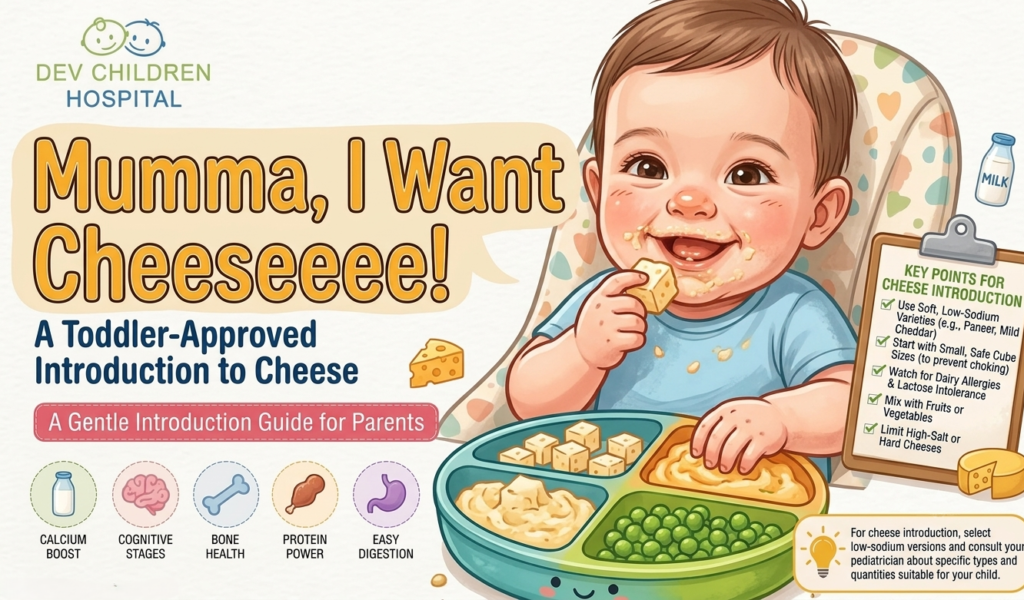
Yes, homemade paneer made from pasteurized milk is one of the safest options for dairy introduction for babies. However, “every day” should mean 1-2 teaspoons mixed into meals, not as a standalone snack. Rotate with yogurt and other calcium sources to prevent excessive protein or fat intake. Always ensure it is mashed or grated appropriately for your baby’s chewing stage.
Is processed cheese slice safe for babies?
No. Processed cheese slices are not safe cheese for infants. They contain high levels of sodium, artificial emulsifiers, preservatives, and sometimes added sugars or colors. These additives offer no nutritional benefit and can harm developing kidneys. Always choose natural, pasteurized, low-sodium cheeses like paneer, mozzarella, or mild cheddar instead.
How much cheese is too much for a 1-year-old?
For toddlers, limit cheese to no more than 1 ounce (28g) per day, preferably split across meals. This aligns with healthy cheese nutrition for toddlers while respecting sodium limits (under 800mg/day for ages 1-3). Remember that cheese should complement not replace other food groups. If your toddler eats cheese daily, ensure the rest of their diet is low in added salt.
My baby gets gassy after cheese. Is it lactose intolerance?
True lactose intolerance is extremely rare in infants. Gas, fussiness, or spit-up after cheese is more likely due to cow’s milk protein allergy (CMPA), overfeeding, or swallowing air during eating. Stop cheese temporarily and consult your pediatrician. Do not assume lactose intolerance and switch to lactose-free products without medical guidance, as CMPA requires complete avoidance of cow’s milk protein.
Can I give cheese to babies daily if they are already drinking formula or breastmilk?
Yes, but with careful planning. Breastmilk and formula already provide significant calcium and protein. When you give cheese to babies daily, reduce the portion accordingly to avoid nutrient excess. Think of cheese as a supplementary source, not a replacement for milk feeds. Monitor total dairy intake to ensure it supports but doesn’t overwhelm—their developing digestive system. Your pediatrician can help calculate optimal amounts based on your baby’s weight and growth pattern.