
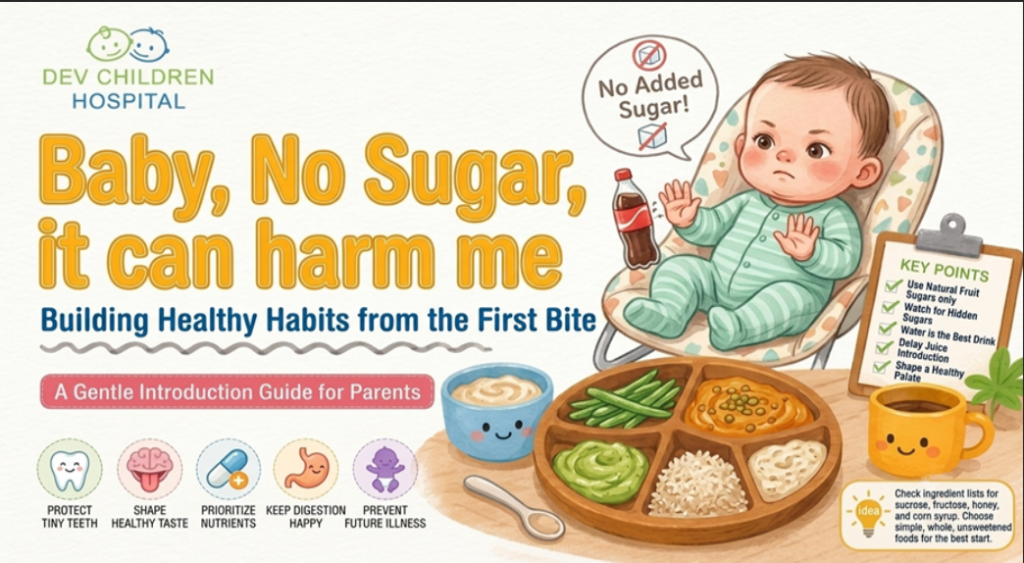
It is completely natural to want to make your baby’s meals more appealing. In many households, adding a pinch of sugar to milk, porridge, or homemade purees is a common, well-intentioned habit. However, an infant’s developing body processes nutrients very differently than an adult’s.
Many parents ask our pediatricians about the safety of introducing sugar to babies, and whether a little bit can really cause harm.
At Dev Children Hospital, Vadodara, we believe that informed parents make the best health decisions for their children. Backed by our advanced Level-3 NICU and PICU expertise, we are committed to providing you with evidence-based, compassionate, and clear nutritional guidance. This comprehensive guide will explain exactly why added sugar should be avoided in infancy and how to safely sweeten your baby’s diet.
The Medical Verdict: Is Sugar Bad for Babies?
The short answer from the global medical community is a resounding yes: added sugar is bad for babies.
Both the World Health Organization (WHO) and the American Academy of Pediatrics (AAP) have strict guidelines: there should be no added sugar for babies under 1 year of age, and it should be strictly limited until at least age 2.
Why? Because infants do not need added sugar for energy. Breastmilk, formula, and nutrient-dense whole foods provide all the necessary carbohydrates and calories for healthy brain and body development. Added sugar offers zero nutritional benefit.
The Hidden Effects of Sugar on Babies
Introducing refined sugar early in life can have several negative effects of sugar on babies, both immediate and long-term:
- Baby Tooth Decay: Even before all teeth have erupted, sugar feeds harmful bacteria in the mouth. This produces acid that attacks developing enamel, leading to early childhood cavities.
- Developing a “Sweet Tooth”: A baby’s palate is highly impressionable. Early exposure to added sugar rewires their taste preferences, making them more likely to reject bland, nutrient-dense foods (like vegetables) and leading to lifelong picky eating.
- Empty Calories & Unhealthy Weight Gain: Sugar provides “empty calories”—energy without essential vitamins, minerals, or fiber. This can displace nutritious foods and increase the risk of unhealthy infant weight gain.
- Immune System Impact: High sugar intake can temporarily suppress immune function, making babies slightly more susceptible to minor viral or bacterial infections.
When Can Babies Have Sugar? (The Timeline)
Understanding the appropriate timeline helps parents set healthy boundaries from day one:
- 0 to 12 Months: Strictly NO added sugar. This includes white sugar, brown sugar, jaggery (gur), and honey. (Crucial Warning: Honey carries a severe risk of infant botulism and must never be given to a child under 1 year.)
- 1 to 2 Years: Keep added sugar as low as possible (ideally zero). Focus on building healthy family eating habits with whole foods.
- 2 Years and Older: The AAP recommends limiting added sugars to less than 25 grams (about 6 teaspoons) per day for toddlers and young children.
Natural Sweeteners for Babies: Safe Alternatives
Parents often wonder how to make food palatable without using refined sugar. The best approach is to use whole foods that provide natural sweetness along with essential fiber, vitamins, and minerals.
| Safe Alternative | Best Used For | Why It’s Healthy |
|---|---|---|
| Mashed Fruits (Banana, Apple, Pear, Chikoo) | Sweetening porridges, oats, or yogurt. | Provides natural fructose packaged with vital fiber and vitamins. |
| Mashed Vegetables (Sweet Potato, Pumpkin, Carrot) | Adding mild sweetness to savory dishes like khichdi or dal. | Rich in beta-carotene, fiber, and gentle on the digestive system. |
| Date Powder (For babies OVER 1 year only) | A natural, nutrient-dense sweetener for toddler snacks. | Contains iron, potassium, and fiber, with a lower glycemic impact than refined sugar. |
Pediatrician’s Warning: Do not substitute refined sugar with jaggery (gur) or honey for infants under 1 year. They are still concentrated forms of sugar, and honey poses a life-threatening botulism risk.
How to Read Labels: Spotting Hidden Sugars
As your baby transitions to packaged foods (like commercial cereals, rusks, or biscuits), it is vital to read the ingredient list carefully. Sugar is often hidden under different names.
Avoid products where any of these appear in the first three ingredients:
- Sucrose or high-fructose corn syrup
- Fruit juice concentrate
- Maltose, dextrose, or cane juice
- Invert sugar
Always choose products labeled “no added sugar” with short, recognizable ingredient lists.
When to Consult a Pediatrician About Your Baby’s Diet
While transitioning to a no-sugar diet is a great goal, some babies may need extra support. Book an appointment at Dev Children Hospital if:
- Your baby is struggling with extreme picky eating and refuses all non-sweetened foods.
- You notice white, brown, or black spots on your baby’s emerging teeth (early signs of decay).
- You have concerns about your baby’s weight gain, growth milestones, or digestive health.
Trusted Pediatric Care at Dev Children Hospital, Vadodara
Navigating your child’s nutrition and development shouldn’t be a source of anxiety. As a dedicated children’s hospital in Vadodara, we provide compassionate and advanced care for newborns, infants, and children up to 18 years.
Led by experienced pediatricians, we offer Level-3 NICU, Level-3 PICU, routine vaccinations, growth monitoring, and 24×7 pediatric emergency care in a safe, child-friendly environment. From routine check-ups to critical care, we offer dependable support that keeps your child safe, healthy, and comforted.
Need guidance on your baby’s nutrition or a routine growth check?
Book a Consultation with our expert pediatricians in Vadodara today. Let’s build a healthy, sugar-smart foundation for your little one.
Can I add a little jaggery (gur) or honey to my 6-month-old's food instead of sugar?
No. While jaggery and honey are natural, they are still concentrated forms of added sugar. More importantly, honey carries a severe risk of infant botulism and must never be given to a child under 1 year of age.
Is the natural sugar in fruits bad for my baby?
No. The natural sugars found in whole fruits come packaged with essential fiber, vitamins, and minerals. The fiber slows down sugar absorption, making it perfectly safe and highly beneficial for your baby’s development.
My baby refuses to eat without sugar. How do I fix this?
It takes time for a baby’s palate to reset. Stop adding sugar completely and offer naturally sweet foods (like fruit purees) alongside bland foods. It may take 10–15 exposures for them to accept a new taste. If you are struggling, consult our pediatricians for a personalized, step-by-step feeding plan.
Is the sugar in breastmilk or formula harmful to my baby?
No. Breastmilk and formula contain lactose, which is a naturally occurring sugar essential for your baby’s brain development and energy. This natural sugar is fundamentally different from added refined sugar. Lactose is easily digested by infants and comes packaged with vital antibodies, fats, and proteins. You should never dilute formula or avoid breastfeeding out of concern for its natural sugar content.
Are commercial baby biscuits, rusks, and packaged cereals safe if they say "no added sugar"?
Not always. Many products labeled “no added sugar” still contain fruit juice concentrates or maltodextrin, which act as hidden sugars in the body. Always read the full ingredient list, not just the front label. If a product tastes very sweet, it likely contains a form of sugar regardless of the claim. When in doubt, choose plain, single-ingredient foods and consult your pediatrician for safe packaged food recommendations.
Can early sugar exposure increase my baby's risk of obesity or diabetes later in life?
Yes, research suggests it can. Studies show that early and frequent exposure to added sugars during infancy can alter a child’s metabolism and taste preferences, increasing the long-term risk of childhood obesity, type 2 diabetes, and cardiovascular issues. The first two years of life are a critical window for establishing lifelong eating habits. By avoiding added sugar now, you are actively protecting your child’s future health.