
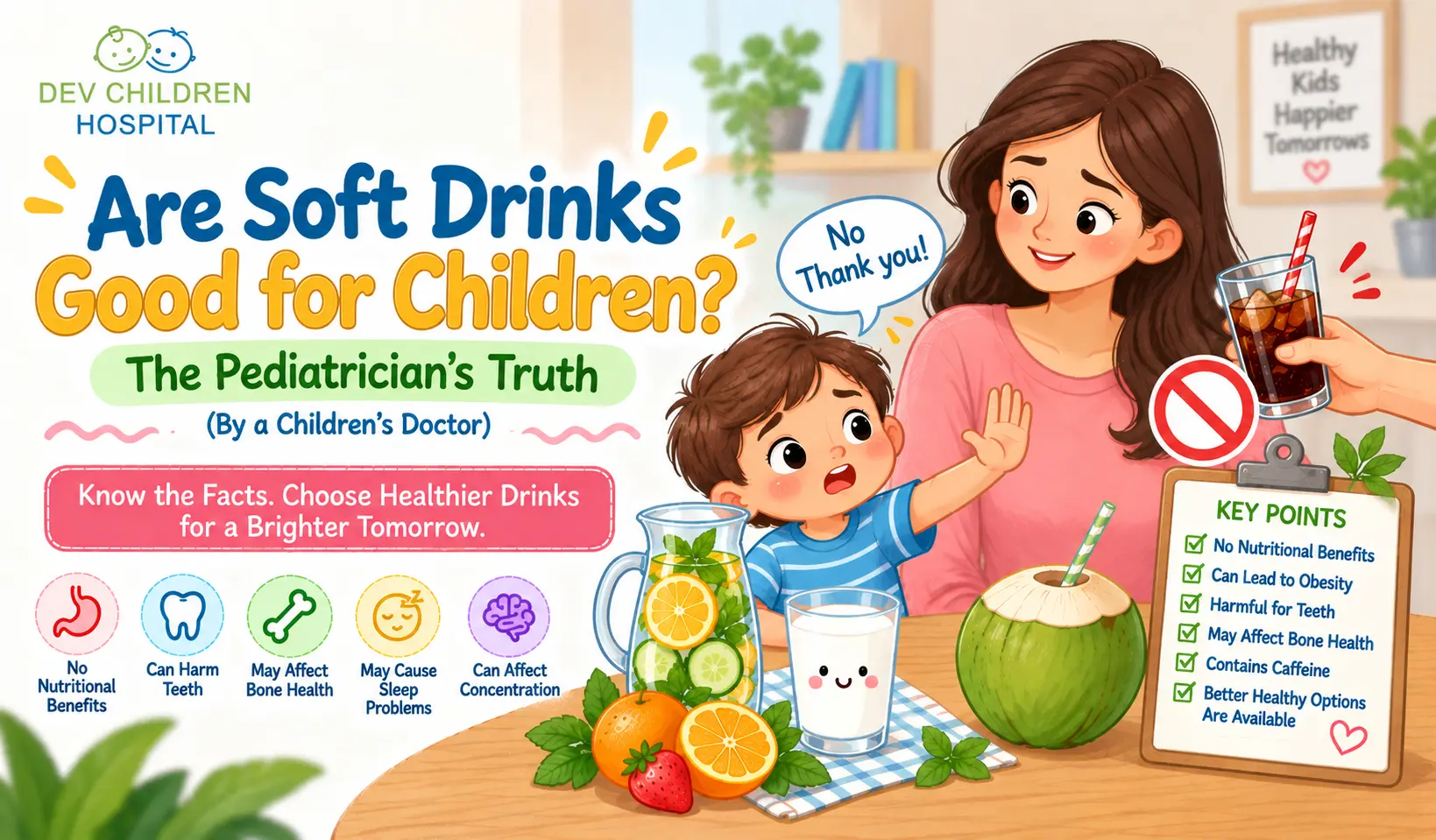
As a children’s doctor at Dev Children Hospital, Vadodara, I see the consequences of this daily dilemma in my clinic. Parents often wonder if an occasional sip is truly harmful, or if the marketing claims of “vitamin-enriched” or “zero sugar” sodas make them a safer choice. The medical reality, however, is quite clear. When it comes to soft drinks for children, the pediatric consensus is that they offer zero nutritional benefits and pose significant risks to a growing child’s physical and cognitive development.
This comprehensive guide will strip away the marketing hype and give you the unfiltered, evidence-based truth about carbonated beverages, helping you make confident, health-protective choices for your family.
Are Soft Drinks Good for Children?
The short, unfiltered medical answer is no. Soft drinks for children are not good for their health, and pediatricians strongly recommend avoiding them entirely, especially for children under the age of 5.
Major health organizations, including the World Health Organization (WHO) and the American Academy of Pediatrics (AAP), advise that children should not consume beverages with added sugars. Soft drinks are essentially liquid candy. They provide “empty calories” energy without a single essential vitamin, mineral, protein, or fiber that a growing body needs.
The Hidden Dangers: Understanding the Effects of Soft Drinks on Children
When parents ask me about the effects of soft drinks on children, I explain that the damage goes far beyond just a temporary sugar rush. The regular consumption of carbonated, sugary beverages can impact multiple systems in a child’s developing body:
Childhood Obesity: Liquid calories do not trigger the brain’s “fullness” signals the way solid food does. A child can easily consume hundreds of excess calories from a soda without feeling full, leading directly to unhealthy weight gain.
Dental Decay: Soft drinks are a double threat to teeth. They are highly acidic, which erodes tooth enamel, and packed with sugar, which feeds cavity-causing bacteria. This combination accelerates tooth decay rapidly.
Bone Health Risks: Many dark colas contain phosphoric acid. High levels of phosphoric acid can interfere with the body’s ability to absorb calcium, which is critical for building strong bones during childhood and adolescence.
Sleep Disruption and Anxiety: Most sodas contain caffeine. A child’s nervous system is highly sensitive to stimulants. Caffeine can cause insomnia, jitteriness, anxiety, and even rapid heart rates in young children.
Understanding these effects of soft drinks on children helps parents realize that a “treat” can quickly turn into a long-term health liability.
The Sugar Trap: How Much Sugar is Really in a Soda?
To truly understand the sugar in soft drinks, we need to visualize it. A standard 330ml can of regular cola contains approximately 35 to 40 grams of sugar. That is roughly 9 to 10 teaspoons of pure sugar in a single serving.
The WHO recommends that children consume less than 25 grams (6 teaspoons) of added sugar per day for optimal health. This means just one can of soda exceeds a child’s entire daily sugar limit in one sitting.
When a child consumes this massive dose of sugar in soft drinks, their blood glucose spikes rapidly, giving them a burst of hyperactive energy. This is quickly followed by a “sugar crash,” leading to fatigue, irritability, and intense cravings for more sugary foods. Chronic spikes and crashes can also strain the pancreas and increase the risk of insulin resistance later in life.
What About “Diet” or “Zero Sugar” Soft Drinks?
Many parents assume that switching to diet or zero-sugar sodas is a safe loophole. Unfortunately, it is not.
While these drinks lack caloric sugar, they are loaded with artificial sweeteners (like aspartame, sucralose, or stevia). Emerging research suggests that artificial sweeteners can alter the gut microbiome, potentially affecting metabolism and glucose tolerance. Furthermore, they train a child’s palate to expect hyper-sweet flavors. When a child’s brain gets used to the intense sweetness of a diet soda, natural foods like fruits and vegetables begin to taste bland and unappealing, leading to severe picky eating. The sugar in soft drinks is bad, but the psychological and metabolic impact of artificial sweeteners is equally concerning.
Healthy Drinks for Kids: What to Offer Instead
If you take away the soda, what do you give them? Hydration is vital, but it doesn’t have to be boring. Here are the best healthy drinks for kids that pediatricians recommend:
- Plain Water: The ultimate hydrator. If your child finds it boring, use colorful cups, fun straws, or add ice cubes shaped like stars or animals.
- Milk: Cow’s milk (or fortified plant-based alternatives) provides essential calcium and Vitamin D. Limit intake to 2-3 cups a day so it doesn’t fill them up before meals.
- Infused Water: Add slices of cucumber, fresh mint, strawberries, or lemon to a jug of water. It looks fancy, tastes refreshing, and contains zero added sugar.
- Fresh Lime / Coconut Water: These are excellent natural sources of electrolytes. A pinch of roasted cumin powder and a tiny drop of honey (for kids over 1 year) makes for a perfect, gut-friendly summer cooler.
By consistently offering these healthy drinks for kids, you naturally reset their palate to appreciate subtle, natural flavors.
How to Handle the “But All My Friends Drink It!” Phase
As children enter school, peer pressure and aggressive marketing become major hurdles. Your child might say, “But my friends drink it at lunch!”
The key is education, not just strict prohibition. Sit down and explain why you limit soda in simple terms they can understand: “Soda has too much sugar, which makes our teeth hurt and gives our tummy aches. We drink water and milk to make our bones strong like superheroes.”
Furthermore, model the behavior you want to see. If you are drinking a soda, they will want one too. Make your home a “soda-free zone” and stock the fridge with the healthy drinks for kids listed above. When it is not easily available at home, the habit never forms.
When to Consult a Pediatrician About Your Child’s Diet
“If you’re concerned about your child’s consumption of soft drinks for children and their health impacts, of a high-sugar diet. Book an appointment at Dev Children Hospital if you notice:
- Rapid or unhealthy weight gain.
- Frequent complaints of stomach aches, bloating, or acidity.
- Visible cavities, tooth pain, or sensitive teeth.
- Extreme fatigue, mood swings, or difficulty concentrating in school.
- Severe picky eating where they refuse all natural foods.
Trusted Pediatric Care at Dev Children Hospital, Vadodara
Navigating your child’s nutrition in a world full of junk food marketing is challenging, but you don’t have to do it alone. As a dedicated children’s hospital in Vadodara, we provide compassionate, advanced care for newborns, infants, and children up to 18 years.
Led by experienced pediatricians, we offer Level-3 NICU, Level-3 PICU, routine vaccinations, growth and nutrition monitoring, and 24×7 pediatric emergency care in a safe, child-friendly environment. From answering your daily parenting questions to managing complex health issues, we offer dependable support that keeps your child safe, healthy, and comforted.
Book a Consultation with our expert pediatricians in Vadodara today. Let’s build a healthy, sugar-smart foundation for your little one.