
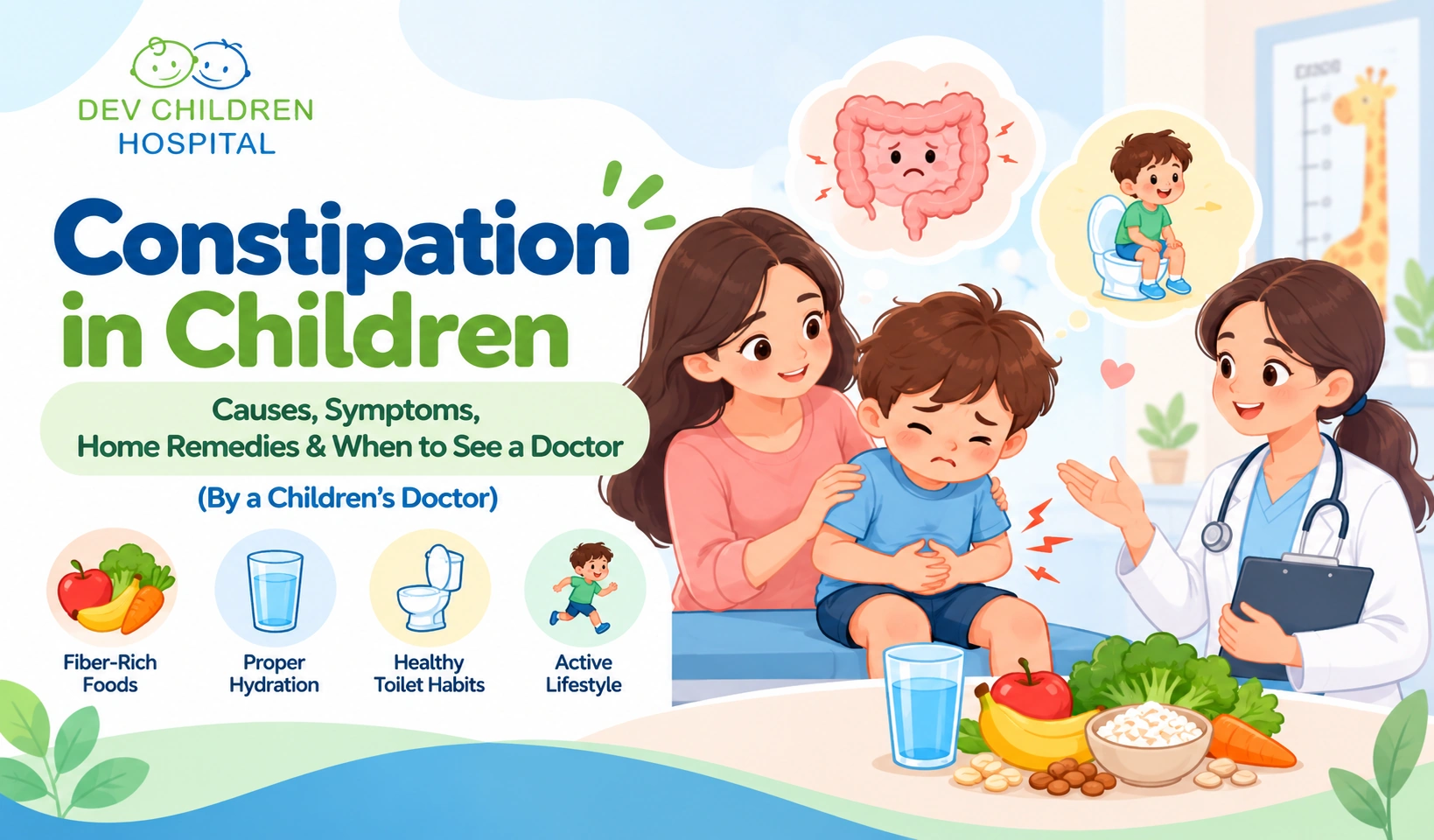
Constipation in Children: Causes, Symptoms, Home Remedies & When to See a Doctor (By a Children’s Doctor)
Constipation is a common concern among parents. A child may complain of stomach discomfort, avoid going to the toilet, pass hard stools, or become upset when trying to have a bowel movement. These symptoms can be particularly stressful when parents are unsure whether the problem is temporary or requires medical attention.
Constipation in children does not always mean that a child is simply going to the toilet less often. Stool consistency, pain, difficulty passing stool, and withholding behavior are also important. Some children may have constipation even when they pass stool relatively regularly.
Most childhood constipation is related to functional factors such as stool withholding, dietary changes, toilet training, or changes in routine. However, persistent or severe symptoms should be evaluated by a pediatrician. The National Institute of Diabetes and Digestive and Kidney Diseases (NIDDK) notes that children with symptoms lasting more than two weeks, or those with certain warning signs, should be assessed by a doctor.
This guide explains the common causes, symptoms, home-care measures, dietary considerations, and situations when professional pediatric care is important.
What Is Constipation in Children?
Children naturally have different bowel patterns. Some may pass stool several times a day, while others may go less frequently. Therefore, the number of bowel movements alone does not determine whether a child is constipated.
Constipation in children may involve hard, dry, or lumpy stools, painful bowel movements, difficulty passing stool, or a feeling that the bowel has not completely emptied. NIDDK also identifies fewer than two bowel movements per week as one possible sign in children.
Parents should pay attention to changes in their child’s usual bowel habits. A child who suddenly begins avoiding the toilet, complains of painful stools, or repeatedly passes very hard stools may need support before the problem becomes more persistent.
What Causes Constipation in Children?
There is usually more than one possible reason for constipation. Understanding the underlying trigger can help parents respond appropriately.
Stool Holding
One of the most common causes is holding in stool. A child may avoid going because a previous bowel movement was painful. Once the stool remains in the colon for longer, more water is absorbed from it, making it harder and more difficult to pass.
Children may also hold stool because they do not want to stop playing, feel uncomfortable using a school or public bathroom, or are worried about toilet training.
This can create a cycle: hard stool causes pain, pain makes the child hold stool, and holding makes the next bowel movement harder.
Toilet Training
Toilet training can sometimes contribute to child constipation. If a child feels pressured, frightened, or rushed during toilet training, they may begin avoiding bowel movements.
A calm and supportive approach is generally preferable. Children should not be punished for accidents or pressured to use the toilet before they are ready.
Diet and Low Fiber
A diet that does not contain enough fiber can contribute to constipation. Fiber is found in foods such as fruits, vegetables, legumes, whole grains, and some nuts and seeds.
NIDDK recommends getting enough fiber and increasing it gradually rather than making a sudden large change.
Not Drinking Enough Fluids
Adequate fluid intake supports normal digestion and helps fiber work effectively. Children who are dehydrated may be more likely to develop harder stools.
The amount of fluid a child needs depends on factors such as age, body size, activity, health, and climate. Parents should discuss individual fluid requirements with their child’s pediatrician when there are concerns.
Changes in Routine or Emotional Stress
Travel, starting school, changes in daily routine, family changes, or anxiety can affect toileting habits. Some children may begin withholding stool when their normal routine changes.
Parents should consider whether the symptoms started around a particular event or change in routine.
Medicines and Underlying Health Conditions
Some medicines and supplements can contribute to constipation. Iron supplements and certain other medicines are among those that may make constipation worse. Children should not stop prescribed medicines without discussing the issue with their doctor.
Less commonly, constipation may be associated with conditions such as celiac disease, thyroid problems, Hirschsprung disease, or other medical conditions. Persistent symptoms therefore deserve appropriate evaluation rather than repeated home treatment alone.
Common Symptoms of Child Constipation
The symptoms can vary according to a child’s age and the severity of the problem.
Common signs include:
- Hard, dry, or lumpy stools
- Pain during bowel movements
- Straining while passing stool
- Fewer bowel movements than usual
- A feeling that stool has not completely passed
- Abdominal discomfort or bloating
- Avoiding or delaying the toilet
- Unusual body movements while trying to hold stool
- Stool leaking or appearing in underwear
- Reduced appetite in some children
NIDDK notes that children with constipation may sometimes have stool in their underwear that looks like diarrhea. This can happen when softer stool passes around a buildup of stool in the rectum.
Parents should not assume that every episode of abdominal pain or infrequent stool is constipation. The child’s overall symptoms and usual bowel pattern matter.
Child Constipation: When Should Parents Be Concerned?
Occasional constipation can sometimes improve with appropriate dietary and behavioral changes. However, recurring or persistent symptoms deserve greater attention.
Occasional Constipation
If symptoms are mild and short-lived, parents can focus on appropriate fluids, fiber-rich foods, physical activity, and relaxed toilet habits.
The goal is not simply to make the child pass stool immediately. It is to help establish comfortable, regular bowel habits.
Persistent or Recurrent Constipation
If symptoms continue for more than two weeks or do not improve with appropriate home measures, parents should consult a pediatrician.
Repeated episodes may also indicate that the child needs a more structured treatment plan.
Warning Signs That Need Prompt Medical Attention
Parents should seek medical evaluation promptly if constipation occurs with:
- Blood in the stool or rectal bleeding
- Persistent or constant abdominal pain
- Significant abdominal swelling or bloating
- Vomiting
- Unexplained weight loss
These warning signs should not be managed solely with home remedies.
Constipation Remedies for Kids: What Can Parents Do at Home?
For mild constipation, several supportive measures may help. However, the appropriate approach depends on the child’s age, symptoms, and medical history.
Offer Fiber-Rich Foods
Include naturally fiber-rich foods such as:
- Pears
- Apples with the skin when appropriate
- Berries
- Oranges
- Oatmeal
- Whole-grain bread and cereals
- Lentils
- Beans
- Chickpeas
- Peas
- Broccoli
- Carrots
NIDDK recommends increasing fiber gradually so the child’s digestive system can adjust.
Encourage Appropriate Fluid Intake
Offer water regularly throughout the day. When increasing dietary fiber, adequate fluid intake becomes particularly important.
However, simply forcing a child to drink large amounts of water is not a complete treatment for constipation. HealthyChildren.org notes that hydration is important, but dietary and behavioral factors also need attention.
Create a Regular Toilet Routine
For toilet-trained children, encourage sitting on the toilet after meals. Give the child enough time and create a calm environment.
A regular routine can help children become more comfortable responding to their body’s natural urge to pass stool. NIDDK specifically recommends establishing bathroom habits such as using the toilet after meals.
Support a Comfortable Toilet Position
Children should be able to sit comfortably with their feet supported rather than dangling. A suitable footstool can help a child maintain a stable position and relax during a bowel movement.
Avoid rushing the child or making toilet time stressful.
Encourage Physical Activity
Age-appropriate physical activity is an important part of a child’s overall health. Active play can also support healthy bowel habits.
For children who spend long periods sitting, encourage regular opportunities to move, play, walk, or participate in suitable physical activities.
Foods That May Help With Constipation
Food choices can support healthy bowel habits, but there is no single food that works for every child.
Fruits
Fruits such as pears, apples with the skin when age-appropriate, berries, and oranges can provide dietary fiber. Offer fruits in forms suitable for the child’s age and eating abilities.
Vegetables
Vegetables such as broccoli, peas, carrots, and other fiber-containing vegetables can contribute to a varied diet.
Whole Grains and Legumes
Oatmeal, whole-wheat foods, lentils, chickpeas, and beans can increase dietary fiber. Introduce higher-fiber foods gradually, particularly if the child is not accustomed to them.
Foods and Habits to Review
Parents can look at the child’s overall diet rather than focusing on one food to remove. Diets dominated by highly processed, low-fiber foods may provide less dietary fiber.
The objective should be a varied, balanced eating pattern rather than a highly restrictive diet.
Constipation Treatment for Children: When Home Care Is Not Enough
When dietary and behavioral changes do not adequately address the problem, a pediatrician may recommend additional treatment.
A doctor may ask about:
- How often the child passes stool
- Stool appearance and consistency
- Duration of symptoms
- Diet and fluid intake
- Toilet habits
- Physical activity
- Medicines and supplements
- Previous digestive problems
- Growth and general health
A physical examination may also be performed. In some situations, medical tests may be considered to look for an underlying cause.
Medication may sometimes be part of constipation treatment for children. However, parents should not give laxatives, enemas, or stool-softening medicines without appropriate medical guidance. NIDDK specifically advises discussing laxative use with a child’s doctor.
Constipation During Potty Training
Potty training can be a challenging stage for some families. A child may resist sitting on the toilet or intentionally hold stool after experiencing a painful bowel movement.
Parents can make the process easier by:
- Keeping toilet time calm
- Avoiding punishment
- Allowing the child adequate time
- Using a comfortable foot support
- Praising cooperation rather than demanding results
- Taking a temporary break from toilet training if constipation is making the process stressful
The American Academy of Pediatrics notes that stool withholding is common in functional constipation and that children should not be pushed into toilet training.
Can Constipation Cause Stool Leakage in Children?
Yes. Some children with prolonged constipation may have stool leakage or staining in their underwear.
This can be confusing for parents because the material may appear loose or watery. However, stool leakage does not necessarily mean that the child has diarrhea. It can occur when softer stool passes around retained stool.
Children should not be punished or shamed for these accidents. Recurrent soiling should be discussed with a pediatrician so the underlying constipation can be properly assessed and managed.
How Can Parents Prevent Constipation in Children?
Prevention focuses on establishing healthy daily habits.
Parents can encourage:
- A varied diet containing fiber-rich foods
- Appropriate fluid intake
- Regular physical activity
- A consistent toilet routine
- Prompt response to the urge to pass stool
- Comfortable toilet positioning
- A calm approach to toilet training
It is also important to identify stool withholding early. If a child regularly avoids bowel movements because of pain or fear, discussing the problem with a pediatrician can help prevent the cycle from becoming persistent.
When Should You Take Your Child to a Pediatrician?
Parents should arrange a pediatric consultation when constipation lasts longer than two weeks, keeps returning, or does not improve with appropriate home measures.
A medical evaluation is especially important when there is:
- Blood in the stool
- Rectal bleeding
- Persistent abdominal pain
- Significant bloating or swelling
- Vomiting
- Unexplained weight loss
- Severe or recurrent painful bowel movements
- Persistent stool leakage
- Concerns about feeding, growth, or general health
Parents can consult the Pediatric OPD at Dev Children Hospital, Vadodara for evaluation of ongoing digestive and pediatric health concerns.
Trusted Pediatric Care at Dev Children Hospital, Vadodara
Digestive concerns can be worrying when they affect a child’s comfort, appetite, toilet habits, or daily routine. At Dev Children Hospital, Vadodara, pediatric care is focused on the health and well-being of newborns, infants, children, and adolescents up to 18 years.
Parents seeking broader information about available pediatric services can explore Our Services at Dev Children Hospital.
If your child’s constipation is persistent, painful, recurrent, or accompanied by warning signs, a pediatric assessment can help determine whether the problem is related to bowel habits and diet or whether further evaluation is needed.
What is constipation in children?
Constipation can involve hard, dry, or painful stools, difficulty passing stool, fewer bowel movements than usual, or a feeling that the bowel has not completely emptied. Children can have different normal bowel patterns, so stool consistency and discomfort are important considerations.
What causes constipation in children?
Common causes include stool withholding, toilet-training difficulties, low dietary fiber, inadequate fluid intake, changes in routine, and some medicines. Less commonly, underlying medical conditions can contribute.
How can I relieve my child’s constipation at home?
For mild symptoms, parents can focus on fiber-rich foods, appropriate fluid intake, regular toilet routines, comfortable toilet positioning, and age-appropriate physical activity. If symptoms persist or are severe, consult a pediatrician.
What foods help with child constipation?
Fiber-rich foods such as fruits, vegetables, whole grains, beans, lentils, and chickpeas can support healthy bowel habits. Fiber should generally be increased gradually and accompanied by appropriate fluid intake.
How much water should a constipated child drink?
Fluid requirements vary according to age, body size, activity level, health, and climate. Rather than following one amount for every child, parents should ask their pediatrician about their child’s individual needs.
When should I take my child to a doctor for constipation?
Consult a pediatrician if symptoms last more than two weeks or do not improve with home measures. Seek prompt medical attention if constipation occurs with blood in the stool, rectal bleeding, persistent abdominal pain, significant bloating, vomiting, or weight loss.
Can constipation cause stomach pain in children?
Yes. Constipation can be associated with abdominal discomfort or bloating. Persistent or constant abdominal pain, however, should be medically evaluated.
Can constipation cause stool leakage or soiling?
Yes. Stool leakage can occur when stool has accumulated in the bowel and softer stool passes around it. Recurrent leakage should be discussed with a pediatrician.
Should parents give laxatives to children?
Parents should not start laxatives or enemas without appropriate medical guidance. A pediatrician can determine whether medication is needed and which treatment is appropriate for the child’s age and condition.
How can constipation be prevented in children?
A varied, fiber-rich diet, appropriate hydration, regular physical activity, comfortable toilet habits, and responding to the urge to pass stool can help support healthy bowel habits.
Constipation can involve hard, dry, or painful stools, difficulty passing stool, fewer bowel movements than usual, or a feeling that the bowel has not completely emptied. Children can have different normal bowel patterns, so stool consistency and discomfort are important considerations.
Common causes include stool withholding, toilet-training difficulties, low dietary fiber, inadequate fluid intake, changes in routine, and some medicines. Less commonly, underlying medical conditions can contribute.
For mild symptoms, parents can focus on fiber-rich foods, appropriate fluid intake, regular toilet routines, comfortable toilet positioning, and age-appropriate physical activity. If symptoms persist or are severe, consult a pediatrician.
Fiber-rich foods such as fruits, vegetables, whole grains, beans, lentils, and chickpeas can support healthy bowel habits. Fiber should generally be increased gradually and accompanied by appropriate fluid intake.
Fluid requirements vary according to age, body size, activity level, health, and climate. Rather than following one amount for every child, parents should ask their pediatrician about their child’s individual needs.
Consult a pediatrician if symptoms last more than two weeks or do not improve with home measures. Seek prompt medical attention if constipation occurs with blood in the stool, rectal bleeding, persistent abdominal pain, significant bloating, vomiting, or weight loss.
Yes. Constipation can be associated with abdominal discomfort or bloating. Persistent or constant abdominal pain, however, should be medically evaluated.
Yes. Stool leakage can occur when stool has accumulated in the bowel and softer stool passes around it. Recurrent leakage should be discussed with a pediatrician.
Parents should not start laxatives or enemas without appropriate medical guidance. A pediatrician can determine whether medication is needed and which treatment is appropriate for the child’s age and condition.
A varied, fiber-rich diet, appropriate hydration, regular physical activity, comfortable toilet habits, and responding to the urge to pass stool can help support healthy bowel habits.