
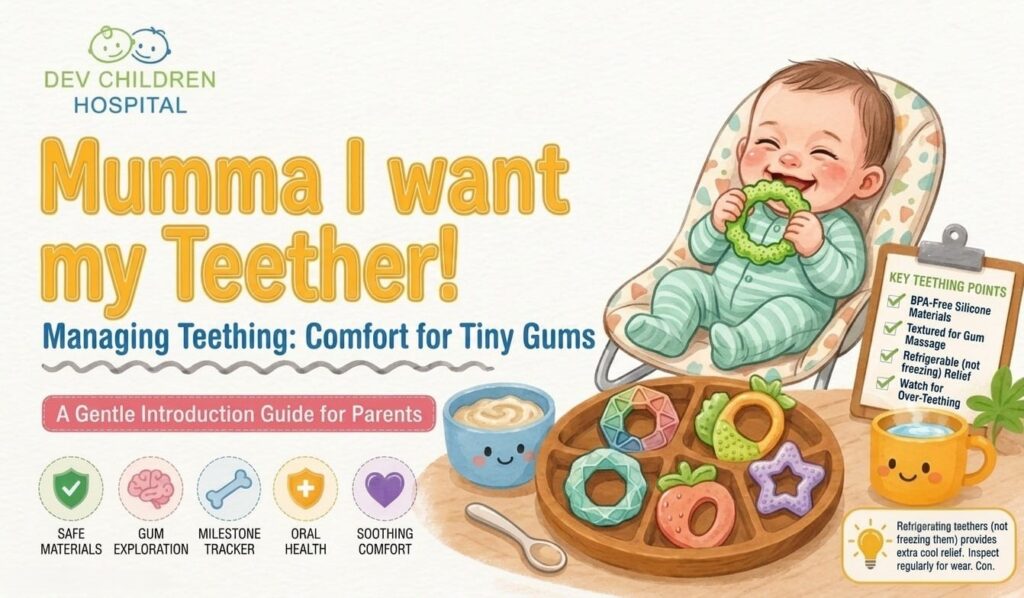
Seeing your little one fuss more than usual, drool excessively, or chew relentlessly on their hands can be both a milestone and a source of stress for parents. Teething is a natural part of your baby’s development, but navigating the discomfort requires the right approach.
Many parents ask us: At what age should I introduce a teether, and how do I do it safely?
At Dev Children Hospital, Vadodara, our experienced pediatricians are here to provide you with evidence-based, compassionate guidance. If you are wondering exactly when to use teether for baby, this comprehensive, doctor-approved guide will help you soothe your little one safely and effectively.
When Do Babies Start Teething? (The Timeline)
Before introducing a teether, it helps to understand the biological timeline of tooth eruption.
Most babies begin teething between 4 to 7 months of age, though it is perfectly normal for some to start as early as 3 months or as late as 12 months. The first teeth to appear are usually the lower central incisors (the bottom front teeth), followed by the upper central incisors.
Pediatrician’s Note: Every baby develops at their own pace. If your baby’s teeth are taking a little longer to appear, there is usually no cause for concern.
How to Spot Teething Symptoms in Babies
Recognizing the true signs of teething helps you know exactly when your baby needs relief. Medically accepted teething symptoms include:
- Increased drooling (which can sometimes cause a mild facial rash).
- A strong urge to chew or bite on fingers, toys, or anything they can grab.
- Irritability or fussiness, especially at night.
- Swollen, tender, or bulging gums.
- A very mild elevation in temperature (under 100.4°F or 38°C).
Myth vs. Fact: What Teething Does NOT Cause
At Dev Children Hospital, we frequently see parents attribute other illnesses to teething. Medical fact: Teething does not cause high fever (above 100.4°F), diarrhea, vomiting, or severe body rashes. If your baby experiences these symptoms, they are likely fighting an unrelated infection and should be evaluated by a pediatrician immediately.
When to Use Teether for Baby (And What Age is Right?)
The short answer: You should introduce a teether when your baby shows the active signs of teething, which is often around 3 to 4 months of age, even before the first tooth actually breaks through the gum line.
At this age, babies discover their hands and begin exploring the world with their mouths. Providing a clean, dedicated teether satisfies their natural urge to chew while providing the gentle counter-pressure their sore gums desperately need.
How it works: The firm, safe pressure of a teether massages the inflamed gum tissue, temporarily numbing the discomfort and making your baby feel more relaxed.
Choosing the Right Teether: A Safety Guide
Not all teethers are created equal. As medical professionals, we prioritize safety above all. Use this guide to choose the right product:
| Teether Type | Is it Safe? | Why? |
|---|---|---|
| Solid Food-Grade Silicone |  Highly Recommended Highly Recommended | Soft, flexible, BPA-free, and easy to clean. Can be chilled in the fridge for extra soothing relief. |
| Solid Rubber | Safe | Durable and provides good counter-pressure. Ensure it is a single piece with no detachable parts. |
| Liquid or Gel-Filled |  Avoid Avoid | If the baby bites down hard, the plastic can puncture, leaking liquid into their mouth or posing a choking hazard. |
| Teething Necklaces/Bracelets | Avoid | Pose severe strangulation and choking hazards. Amber beads can break off and be swallowed. |
| Hard Plastic with Small Parts | Avoid | High risk of choking if small pieces break off. |
How to Clean and Maintain Baby Teethers
Pro-Tip for Cooling: If you want to offer a cold teether, place it in the refrigerator, never the freezer. A frozen teether can become too hard and actually damage your baby’s delicate gum tissue.
Because teethers go directly into your baby’s mouth, strict hygiene is essential to prevent the introduction of harmful bacteria.
- Daily Cleaning: Wash the teether in warm, soapy water, rinse thoroughly, and air dry.
- Sterilization: Depending on the manufacturer’s instructions, you can sterilize solid silicone teethers by boiling them in water for 3–5 minutes or placing them on the top rack of the dishwasher.
- Inspection: Always check the teether before use. If you see any tears, cracks, or signs of wear, throw it away immediately to prevent choking.
When to Consult a Pediatrician for Teething Pain
While most teething discomfort can be managed at home, there are times when professional medical advice is necessary. Book an appointment at Dev Children Hospital if:
- Your baby is in inconsolable pain that does not improve with a teether or gentle gum massage.
- Your baby develops a true fever, diarrhea, or is refusing all milk feeds.
- Your baby’s gums look severely infected, unusually swollen, or are bleeding significantly.
- Your baby has not shown any signs of teeth by 12 to 15 months of age.
Trusted Pediatric Care at Dev Children Hospital, Vadodara
Navigating your child’s developmental milestones shouldn’t be a source of anxiety. As a dedicated children’s hospital in Vadodara, we provide compassionate and advanced care for newborns, infants, and children up to 18 years.
Led by experienced pediatricians, we offer Level-3 NICU, Level-3 PICU, routine vaccinations, growth monitoring, and 24×7 pediatric emergency care in a safe, child-friendly environment. From routine check-ups to critical care, we offer dependable support that keeps your child safe, healthy, and comforted.
Is your baby struggling with teething pain, or do you have concerns about their development?
Book a Consultation with our expert pediatricians in Vadodara today. We are here to help your little one smile through every milestone.