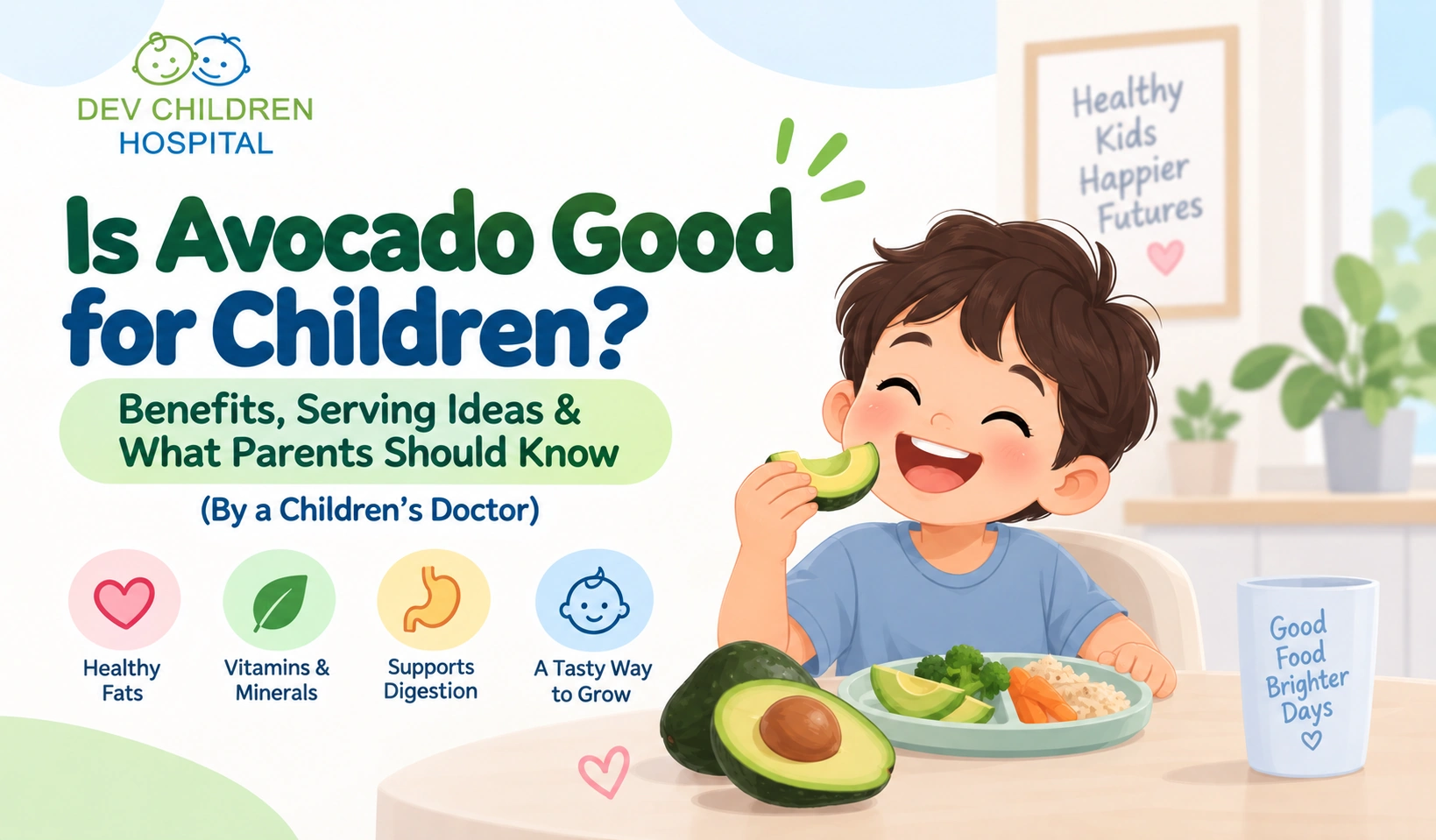
Parents often wonder whether avocado is a good addition to a child’s everyday diet. With its creamy texture, mild taste, and easy preparation, avocado can fit into meals for babies, toddlers, school-age children, and teenagers. But is avocado good for children from a pediatric nutrition perspective?
For most children, avocado can be a nutritious food when served in an age-appropriate way and included as part of a varied diet. It provides unsaturated fat, fiber, and several vitamins and minerals. It is not a substitute for a balanced diet, however, and no single food provides everything a growing child needs.
This guide explains the avocado benefits for kids, how avocado can be introduced during complementary feeding, practical serving ideas, safety precautions, and when parents should discuss a child’s diet with a pediatrician.
Is Avocado Good for Children?
The short pediatric answer
Yes, avocado can be a healthy food for most children. Its soft texture makes it easy to mash, spread, or combine with other foods, while its nutrient profile makes it useful in balanced meals.
The American Academy of Pediatrics notes that healthy fats are important for children’s growth and brain development and includes avocado among foods that provide healthier fats. Learn more about healthy fats in children’s diets from HealthyChildren.org.
So, is avocado good for children as an everyday food? It can be, provided it is offered in suitable portions alongside other nutritious foods rather than treated as a complete meal.
Why healthy fats matter during childhood
Fat is an important source of energy and supports normal growth and development. Children should not be placed on unnecessarily restrictive diets simply because a food contains fat.
Avocado mainly provides unsaturated fat. The overall quality of a child’s diet matters more than avoiding fat altogether. Meals can include avocado along with vegetables, fruits, whole grains, protein foods, and appropriate dairy or alternatives.
What Are the Avocado Benefits for Kids?
Healthy unsaturated fats
One of the main avocado benefits for kids is its contribution of unsaturated fat. These fats can be part of a balanced eating pattern and can help make meals satisfying. This is another of the avocado benefits for kids parents may notice when avocado replaces less nutritious spreads or highly processed toppings.
The goal is not to make every meal high in fat. Instead, parents can use nutrient-rich foods such as avocado to add flavor, texture, and healthy fat while keeping meals varied.
Fiber for digestive health
Avocado also contains dietary fiber. This is one of the practical avocado benefits for kids when it is included alongside other fiber-rich foods.
Fiber helps support regular bowel movements and can help children feel full.
The American Academy of Pediatrics recommends offering a variety of fiber-rich foods, including fruits, vegetables, beans, nuts, and whole grains. Read the AAP’s guide to fiber for children.
For children who are already eating a varied diet, avocado can be one of several foods contributing to daily fiber intake.
Vitamins and minerals
Avocado contains a range of nutrients, including folate, vitamin K, vitamin E, and several B vitamins, along with minerals such as potassium.
The exact nutritional needs of a child depend on age, growth, activity, and overall diet. This is why avocado should be viewed as one nutritious ingredient rather than a food that can meet every nutritional requirement by itself.
Energy and satiety
Because avocado contains fat and fiber, it can make a meal more satisfying. This may be helpful when a child needs an energy-dense food that is still minimally processed.
However, children have different appetites from day to day. A child may eat more at one meal and less at another. Parents generally do not need to pressure children to finish a particular amount.
Avocado for Babies: When Can Babies Eat It?
Starting complementary foods
For infants, avocado can be introduced once complementary foods are started, generally around 6 months of age when the baby is developmentally ready.
WHO recommends complementary foods from around 6 months, while continuing breastfeeding when applicable. Foods should be safe, nutritious, and varied. See WHO guidance on complementary feeding.
This means avocado for babies can be part of early complementary feeding, but it should not replace breast milk or infant formula as the primary source of nutrition during the early transition to solids.
Is avocado suitable as an early food?
Avocado has a naturally soft texture and can be mashed easily. This makes avocado for babies a convenient option when a family is beginning age-appropriate complementary foods.
The AAP provides avocado as an example in homemade baby food combinations and notes that it can contribute nutrients, fiber, and healthy fats. See AAP guidance on making homemade baby food.
When introducing avocado for babies, start with a small amount and pay attention to your baby’s hunger and fullness cues. Introduce foods in a way that matches your child’s developmental abilities.
How to prepare avocado for a baby
For a younger baby who is beginning solids, ripe avocado can be mashed until smooth or prepared in another texture appropriate for the child’s developmental stage.
As babies become more comfortable with solids, textures can gradually become less smooth. Soft, appropriately sized pieces may also be offered when developmentally suitable.
Do not add salt, sugar, honey, or spicy ingredients to a baby’s avocado preparation. Always supervise the baby while eating and use safe food-handling practices.
How Much Avocado Can Children Eat?
Portion size depends on age
There is no single avocado portion that is appropriate for every child. A baby’s needs are different from those of a toddler, school-age child, or teenager.
For infants beginning complementary foods, small amounts are appropriate initially, with quantities increasing gradually as the child’s appetite and feeding skills develop. For older children, avocado can be included as part of a meal or snack according to appetite and the rest of the day’s foods. This is another reason avocado good for children should be considered in the context of the whole eating pattern.
Parents do not need to measure every spoonful. When deciding whether avocado good for children fits a family meal plan, age, appetite, and the child’s overall diet are more important than a fixed number.
Don’t force your child to finish
A child who refuses avocado today may accept it another day. Repeated, pressure-free exposure can help children become familiar with new tastes and textures.
Try offering avocado alongside foods your child already enjoys rather than turning it into a test at mealtime.
Easy Ways to Serve Avocado to Children
Avocado does not need complicated preparation. If you are wondering is avocado good for children in practical everyday meals, simple preparations are often easiest to use consistently.
Mashed avocado
Mash ripe avocado and serve it on its own for a baby who is ready for complementary foods, or combine it with other suitable foods for older children.
Avocado on whole-grain toast
For toddlers and older children, mashed avocado can be spread on whole-grain toast. Add a suitable protein food or fruit to create a more balanced meal.
Avocado with eggs
Avocado pairs well with cooked egg. For older children, you can serve them together with whole grains and vegetables.
Avocado in a homemade dip
Mash avocado with suitable ingredients to make a simple dip for soft vegetables or other age-appropriate foods. Keep added salt low, especially for younger children.
Avocado in smoothies
For older children, a small amount of avocado can be blended into a smoothie with fruit, plain yogurt or another suitable ingredient. Smoothies should complement meals rather than replace a varied diet.
Healthy Foods for Children: Why Variety Matters
Avocado is nutritious, but children need more than one food. Healthy foods for children should come from a variety of food groups so that meals provide different nutrients and textures.
A balanced pattern can include vegetables, fruits, whole grains, protein foods, dairy or suitable alternatives, and sources of unsaturated fats. Water should generally be the main drink.
Parents do not need to make every plate perfect. A varied pattern is the foundation of healthy foods for children, with avocado added when it suits the meal.
Building a balanced child’s plate
A simple meal might combine a whole grain, a protein food, vegetables or fruit, and a source of healthy fat such as avocado. This approach makes it easier to include avocado without allowing it to crowd out other important foods.
For younger children, portion sizes and food textures should be adapted to age and developmental readiness.
Can Children Eat Avocado Every Day?
Daily is not necessarily a problem
For many children, eating avocado regularly can fit into a balanced diet. The question is less about whether avocado is eaten every day and more about what the child’s overall diet looks like.
If a child enjoys avocado, parents can include it in different meals while continuing to offer other fruits, vegetables, grains, and protein foods.
Variety is more important than one “perfect” food
Even nutritious foods should not become the only foods a child eats. Offering variety helps children experience different tastes, textures, and nutrients.
Think of avocado as one useful option among many healthy foods for children, not as a required food or a cure for nutritional problems. Other healthy foods for children remain equally important because nutritional needs are broader than any one ingredient.
Are There Any Risks or Precautions With Avocado?
Food allergies
Avocado allergy is possible, although it is not among the most common childhood food allergies. If your child develops symptoms such as hives, swelling, vomiting, coughing, wheezing, or breathing difficulty after eating a food, seek appropriate medical advice promptly. Breathing difficulty or other severe symptoms require urgent medical attention.
Parents should discuss any suspected food reaction with a pediatrician before deciding how to reintroduce the food. If a child has a known food allergy or another medical concern, personalized advice matters more than general claims about avocado good for children.
Choking risk
Food texture and shape matter, especially for babies and toddlers. Avocado should be soft and prepared in a form appropriate for the child’s developmental stage.
The AAP advises that babies eating finger foods should receive soft foods in shapes and sizes they can manage safely, and caregivers should remain attentive to choking risks.
Digestive sensitivity
A sudden increase in fiber can sometimes cause temporary digestive discomfort in some children. If a child develops persistent diarrhea, significant abdominal pain, repeated vomiting, or other ongoing symptoms, speak with a pediatrician rather than assuming avocado is the cause.
When to speak with a pediatrician
Professional advice can be useful if your child has poor weight gain, significant feeding difficulties, a very limited diet, persistent constipation or diarrhea, suspected food allergies, or concerns about growth and development.
Common Myths About Avocado for Children
Myth 1: Avocado is too high in fat for children
Healthy fats have an important role in childhood nutrition. The type and overall balance of dietary fat matter. Avocado can be included as part of an age-appropriate diet.
Myth 2: Avocado alone provides complete nutrition
Avocado is nutritious, but it does not provide every nutrient a growing child needs in adequate amounts. Children need variety across food groups.
Myth 3: Babies should eat only bland foods
Babies can gradually experience a range of appropriate flavors and textures as complementary feeding progresses. The important points are safety, developmental readiness, and nutritious choices.
Myth 4: More avocado is always better
More is not automatically better. Portion needs vary, and a child’s diet should remain diverse. Avocado is one component of a balanced eating pattern.
When Should Parents Talk to a Pediatrician About Their Child’s Diet?
Consider discussing nutrition with a pediatrician if you notice poor weight gain, unexpected weight changes, persistent digestive symptoms, repeated food reactions, feeding struggles, a very restricted range of foods, or concerns about your child’s growth.
Nutrition advice should be individualized when a child has a medical condition, food allergy, feeding disorder, growth concern, or special dietary requirement.
For general pediatric guidance and nutrition-related concerns, parents can also explore the Pediatric OPD at Dev Children Hospital, Vadodara.
Supporting Healthy Growth Through Good Nutrition
Good childhood nutrition is not about finding one “superfood.” It is about building consistent habits around varied meals, appropriate portions, safe food preparation, and positive mealtimes.
Avocado can be a convenient ingredient because it is soft, versatile, and nutrient-rich. It can be combined with grains, vegetables, fruit, eggs, beans, dairy, or other suitable protein foods depending on the child’s age and dietary pattern.
When parents ask is avocado good for children, the most useful answer is to consider the bigger picture: yes, avocado can be a nutritious choice, but its value comes from how it fits into the child’s overall diet.
Trusted Pediatric Care at Dev Children Hospital, Vadodara
Dev Children Hospital, Vadodara provides pediatric care for newborns, infants, children, and adolescents up to 18 years. Parents can seek guidance on nutrition, growth monitoring, feeding concerns, and other child-health needs through the hospital’s pediatric services.
For younger babies and newborns, parents can learn more about newborn care services. Families can also explore the hospital’s pediatric services for a broader overview of available child-health care.
If you have concerns about your child’s diet, growth, feeding behavior, or reaction to a food, a pediatric consultation can help you understand what is appropriate for your child’s individual needs.