

Gas problem in kids is one of the most common digestive issues parents face. Almost every child experiences gas trouble at some point, especially during early childhood. While gas is usually harmless, it can make children uncomfortable, irritable, and restless. In some cases, frequent gas can also disturb sleep, appetite, and daily activities.
Parents often get worried when their child complains of stomach pain, bloating, or keeps crying without any clear reason. Understanding the real causes of gas, how to manage it at home, and when to see a doctor can help parents handle this issue confidently.
This detailed guide explains everything you need to know about gas problem in kids, including symptoms, causes, treatment, home remedies, and prevention tips.
What Is Gas Problem in Children?
Gas problem occurs when excess air gets trapped in the stomach or intestines. This trapped air causes bloating, pressure, and pain in the abdomen. Children may feel uncomfortable, cry frequently, or complain of tummy pain.
Gas is a normal part of digestion. However, when gas forms excessively or does not pass easily, it leads to discomfort. In children, this happens more often because their digestive system is still developing and sensitive to dietary changes.
Most gas problems in kids are not serious and improve with simple home care.
Why Do Kids Get Gas Problems?
Gas in children can occur for many reasons. Understanding the cause helps parents prevent repeated episodes.
1. Swallowing Air While Eating
Children often eat very fast, talk while eating, or drink using straws. This causes excess air to enter the stomach, leading to gas buildup.
2. Certain Foods That Cause Gas
Some foods naturally produce gas during digestion, such as:
- Beans and lentils
- Cabbage, cauliflower, broccoli
- Potatoes
- Dairy products
- Fried and spicy food
- Carbonated drinks
These foods are harder to digest and can cause bloating.
3. Lactose Intolerance
Some children cannot digest lactose (sugar found in milk). This leads to gas, bloating, stomach pain, and sometimes loose stools.
4. Weak Digestive System
Young children have an immature digestive system. This makes digestion slower, leading to gas formation.
5. Eating Too Much or Too Quickly
Overeating or eating without chewing properly increases air intake and delays digestion.
6. Constipation
Gas often gets trapped when a child is constipated, causing stomach pain and discomfort.
7. Junk Food & Sugary Items
Chocolates, chips, bakery items, and packaged foods disturb digestion and increase gas formation.
Gas Problem in 4-Year-Old Child
Gas problem is very common in 4-year-old children because:
- Their digestion is still developing
- They eat irregularly
- They consume outside food more often
- They swallow air while playing or eating
Common symptoms in 4-year-olds:
- Complaining of stomach pain
- Pulling legs towards the stomach
- Crying without clear reason
- Bloating
- Poor appetite
- Disturbed sleep
Most cases are mild and can be treated with diet changes and home remedies.
Gas Problem in 5-Year-Old Child
At the age of 5, children become more active and independent in eating habits. Gas problems at this age are usually caused by:
- Skipping meals
- Eating junk food
- Drinking cold drinks
- Eating too fast
- Low fiber intake
If gas occurs regularly, parents should observe the child’s food habits and routine carefully.
Symptoms of Gas Problem in Kids
Gas symptoms may vary from child to child. Common symptoms include:
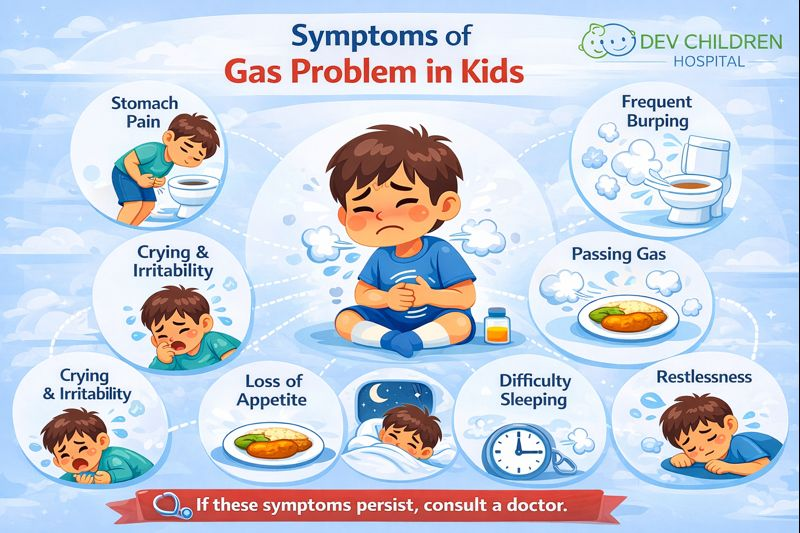
- Stomach pain or cramps
- Bloated or tight tummy
- Frequent burping
- Passing gas frequently
- Crying or irritability
- Loss of appetite
- Difficulty sleeping
- Mild nausea
In babies and toddlers, gas pain may cause excessive crying, especially at night.
How to Know If Gas Pain Is Serious?
Gas is usually harmless, but sometimes it may indicate an underlying issue.
Consult a doctor if your child:
- Has severe or continuous stomach pain
- Has vomiting or fever
- Has blood in stool
- Is losing weight
- Has constipation for many days
- Has gas every day for a long time
- Cries continuously without relief
These may indicate digestive problems that need medical attention.
Home Remedies for Gas Problem in Kids
Most gas problems can be treated safely at home with simple remedies.
1. Warm Water
Warm water relaxes stomach muscles and helps release trapped gas.
2. Gentle Tummy Massage
Light circular massage on the tummy improves digestion and relieves gas.
3. Physical Activity
Walking, stretching, or light play helps move gas out naturally.
4. Ajwain Water (For Older Kids)
Ajwain improves digestion and reduces bloating. Use only in small amounts and after doctor’s advice.
5. Proper Meal Timing
Avoid late-night meals and maintain fixed meal times.
Foods to Eat for Gas Relief
✅ Recommended Foods:
- Rice
- Banana
- Curd
- Oats
- Boiled vegetables
- Soup
- Apple
These foods are light and easy to digest.
Foods to Avoid During Gas Problem
❌ Fried food
❌ Spicy food
❌ Junk food
❌ Carbonated drinks
❌ Chocolates
❌ Excess milk or cheese
Avoiding these foods helps reduce gas formation.
Medical Treatment for Gas in Kids
Most cases do not need medicine. However, a doctor may prescribe:
- Digestive enzymes
- Probiotics
- Gas-relief drops
⚠️ Never give medicine without consulting a pediatrician.
When Should You See a Doctor?
Consult a doctor immediately if your child:
- Has severe stomach pain
- Has vomiting or fever
- Has blood in stool
- Is very weak or drowsy
- Has gas for more than 3–4 days
- Is below 1 year of age
Early diagnosis prevents complications.
How to Prevent Gas Problem in Children
- Encourage slow eating
- Avoid junk food
- Give fiber-rich diet
- Ensure proper hydration
- Avoid overeating
- Encourage daily physical activity
- Maintain regular meal times
Frequently Asked Questions (FAQs)
Is gas common in kids?
Yes, gas is very common and usually harmless.
Can gas cause stomach pain?
Yes, trapped gas can cause pain and discomfort.
Can milk cause gas in kids?
Yes, especially if the child is lactose intolerant.
Is gas dangerous?
No, but frequent gas needs medical attention.
Final Words
Gas problem in kids is common and usually not serious. With proper diet, hydration, and lifestyle changes, most children get relief quickly. Parents should stay calm, observe symptoms, and consult a doctor if the problem persists.
A healthy diet and good eating habits are the key to preventing gas problems in children.