
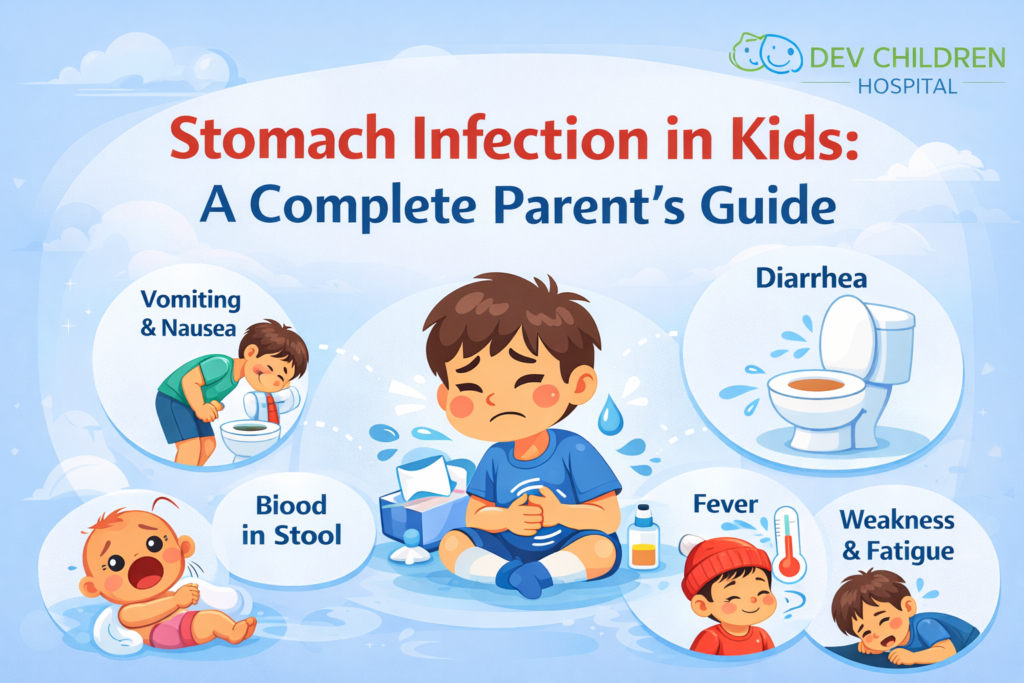
Stomach infection is a very common health problem seen in children, especially during summer and monsoon seasons. It usually affects the stomach and intestines and causes symptoms like vomiting, diarrhea, stomach pain, and fever. Most children recover within a few days, but in some cases, the infection can become serious if not treated properly.
Parents often worry when their child has repeated loose motions or vomiting. The good news is that most stomach infections are mild and can be managed at home with proper care, hydration, and rest. However, infants and young children need extra attention as they can get dehydrated quickly.
This guide explains stomach infection in kids in simple words, including causes, symptoms, treatment, home care, and prevention tips.
What Is a Stomach Infection in Kids?
A stomach infection, also known as gastroenteritis, is an infection of the stomach and intestines. It causes inflammation in the digestive system, leading to symptoms such as diarrhea, vomiting, stomach cramps, and fever.
Children are more likely to get stomach infections because their immune system is still developing. They also tend to touch surfaces, share toys, and put their hands in their mouths, which increases the risk of infection. Stomach infection usually spreads through contaminated food, water, or close contact with an infected person.
Although the condition is commonly called “stomach flu,” it is different from influenza, which mainly affects the lungs and respiratory system.
Overview: What Parents Should Know
Stomach infection is usually not dangerous, but it can cause dehydration if not treated properly. Dehydration happens when the body loses too much water and salts through vomiting or diarrhea.
Most children recover within a few days with rest and fluids. However, severe cases may require medical care, especially in infants and toddlers. Early recognition of symptoms and timely treatment help prevent complications.
Signs and Symptoms of Stomach Infection in Kids
The symptoms of stomach infection may appear suddenly or develop gradually. The most common symptoms are vomiting and diarrhea, which can make the child weak and tired.
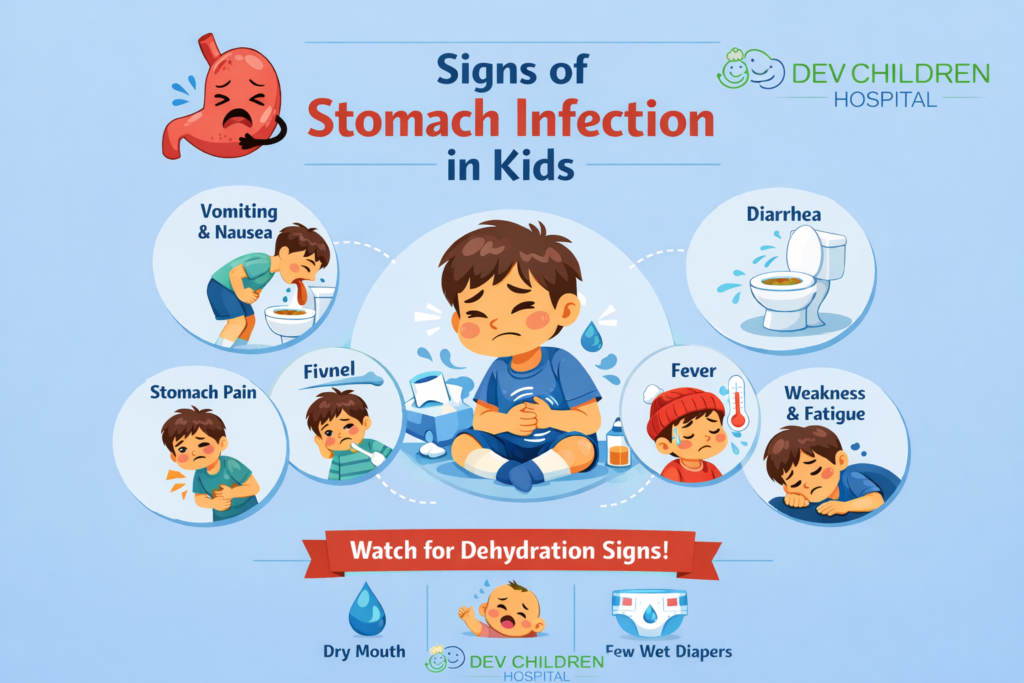
Children with stomach infection may experience:
- Loose or watery stools
- Vomiting or nausea
- Stomach pain or cramps
- Fever
- Weakness or fatigue
- Loss of appetite
- Headache or body pain
When vomiting or diarrhea continues for a long time, the child may lose fluids, leading to dehydration. This is the main concern in stomach infections.
Infant Stomach Infection Symptoms
Stomach infection in infants needs special attention because babies lose fluids faster than older children. Even mild diarrhea can lead to dehydration in infants.
Common signs of stomach infection in babies include:
- Frequent watery stools
- Vomiting after feeding
- Dry mouth or lips
- Sunken eyes
- Crying with fewer or no tears
- Less urine or dry diapers
- Poor feeding or refusal to drink milk
- Unusual sleepiness or irritability
If these symptoms appear, parents should consult a doctor immediately.
What Is Stomach Flu in Children?
Stomach flu is a viral infection that affects the digestive system. It is caused mainly by viruses such as rotavirus or norovirus. The infection spreads easily from one child to another, especially in schools or daycare centers.
Children with stomach flu usually have sudden vomiting, loose motions, fever, and stomach pain. The illness usually lasts for 2 to 3 days. Although it is uncomfortable, most children recover fully with proper hydration and rest.
Causes of Stomach Infection in Children
Stomach infection occurs when harmful germs enter the digestive system.
Viral Causes
Viruses are the most common cause of stomach infection in kids. Rotavirus and norovirus spread easily through contaminated hands, food, or water.
Bacterial Causes
Bacteria such as E. coli, Salmonella, and Shigella can cause severe stomach infections. These usually spread through unhygienic food or unclean drinking water.
Parasitic Causes
Parasites enter the body through contaminated water or undercooked food and may cause long-lasting diarrhea.
Poor Hygiene
Not washing hands, eating uncovered food, and poor sanitation increase the risk of infection.
Is Stomach Flu Contagious?
Yes, stomach flu is highly contagious. It spreads easily through:
- Touching contaminated surfaces
- Sharing food or utensils
- Close contact with an infected person
- Poor hand hygiene
Children can spread the infection even after they start feeling better, so proper hygiene is very important.
How Is Stomach Infection Diagnosed?
Doctors usually diagnose stomach infection based on the child’s symptoms and physical examination. In most mild cases, no tests are required.
However, if symptoms are severe or last longer, doctors may suggest:
- Stool examination
- Blood test
- Urine test to check dehydration
These tests help identify the cause and severity of the infection.
Treatment for Stomach Infection in Kids
There is no specific medicine to cure viral stomach infection. Treatment mainly focuses on preventing dehydration and helping the child feel better.
Oral Rehydration Solution (ORS)
ORS is the most important part of treatment. It helps replace lost fluids and salts and prevents dehydration. It should be given in small, frequent sips.
Fluids
Children should drink plenty of fluids such as:
- Water
- Coconut water
- Rice water
- Buttermilk
Medicines
Doctors may prescribe:
- Anti-vomiting medicine
- Zinc supplements
- Probiotics
- Antibiotics (only if bacterial infection is confirmed)
Self-medication should be avoided.
Home Care for Stomach Infection
Home care plays an important role in recovery. Children should be allowed to rest properly and should not be forced to eat.
Parents should:
- Give fluids frequently
- Offer small and light meals
- Maintain cleanliness
- Keep the child comfortable
- Avoid oily or spicy foods
Proper care at home helps children recover faster.
Foods to Eat and Avoid
Foods to Eat
Light and easily digestible foods help in recovery:
- Rice
- Banana
- Apple puree
- Toast
- Boiled potatoes
- Curd
Foods to Avoid
Avoid giving:
- Fried food
- Spicy dishes
- Fast food
- Cold drinks
- Packaged juices
These foods can worsen stomach irritation.
When Should You See a Doctor?
You should consult a doctor immediately if your child:
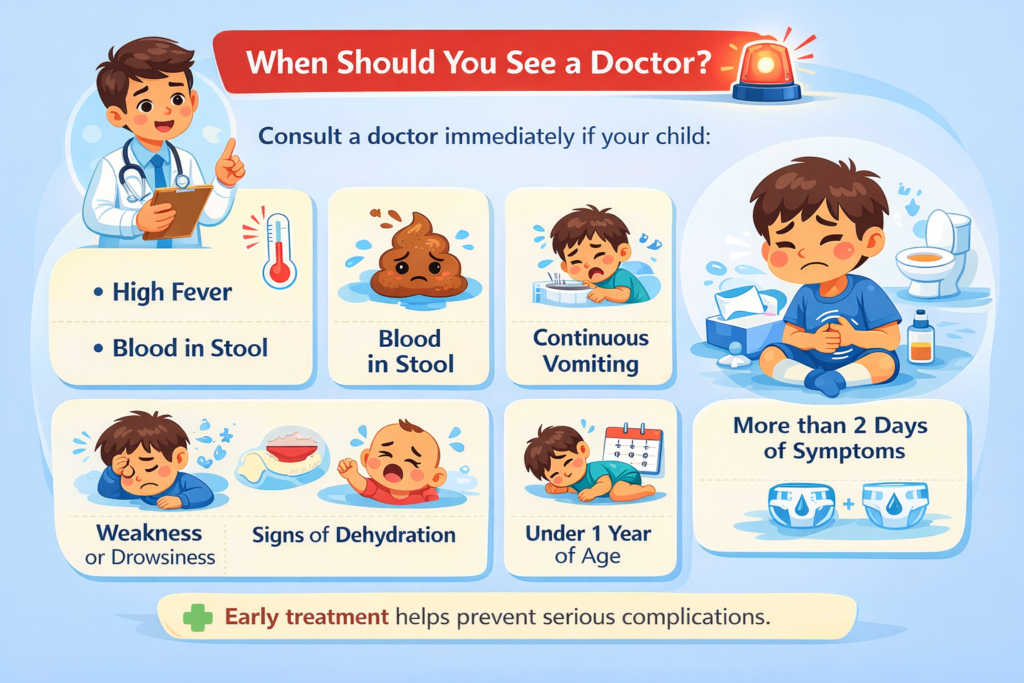
- Has high fever
- Has blood in stool
- Vomits continuously
- Shows signs of dehydration
- Is very weak or sleepy
- Has symptoms for more than 2 days
- Is below 1 year of age
Early treatment helps prevent serious complications.
How to Prevent Stomach Infection in Children
Prevention is better than cure. Simple habits can reduce the risk of stomach infections.
- Wash hands before eating
- Drink clean and boiled water
- Wash fruits and vegetables properly
- Avoid outside food
- Maintain kitchen hygiene
- Keep nails trimmed
- Ensure timely vaccination
Frequently Asked Questions (FAQs)
Is stomach infection common in kids?
Yes, it is very common, especially during summer and monsoon seasons.
How long does stomach infection last?
Most children recover within 2–4 days.
Can stomach infection be treated at home?
Mild cases can be managed at home with ORS and rest.
Is stomach flu contagious?
Yes, it spreads easily through contact and contaminated food.
Can babies take ORS?
Yes, ORS is safe and very important for babies with diarrhea.
Final Thoughts
Stomach infection in kids is common but should never be ignored. With timely care, proper hydration, and good hygiene, most children recover quickly without complications.
Parents should observe symptoms carefully and consult a doctor if the condition worsens. Simple preventive steps can go a long way in keeping children healthy.